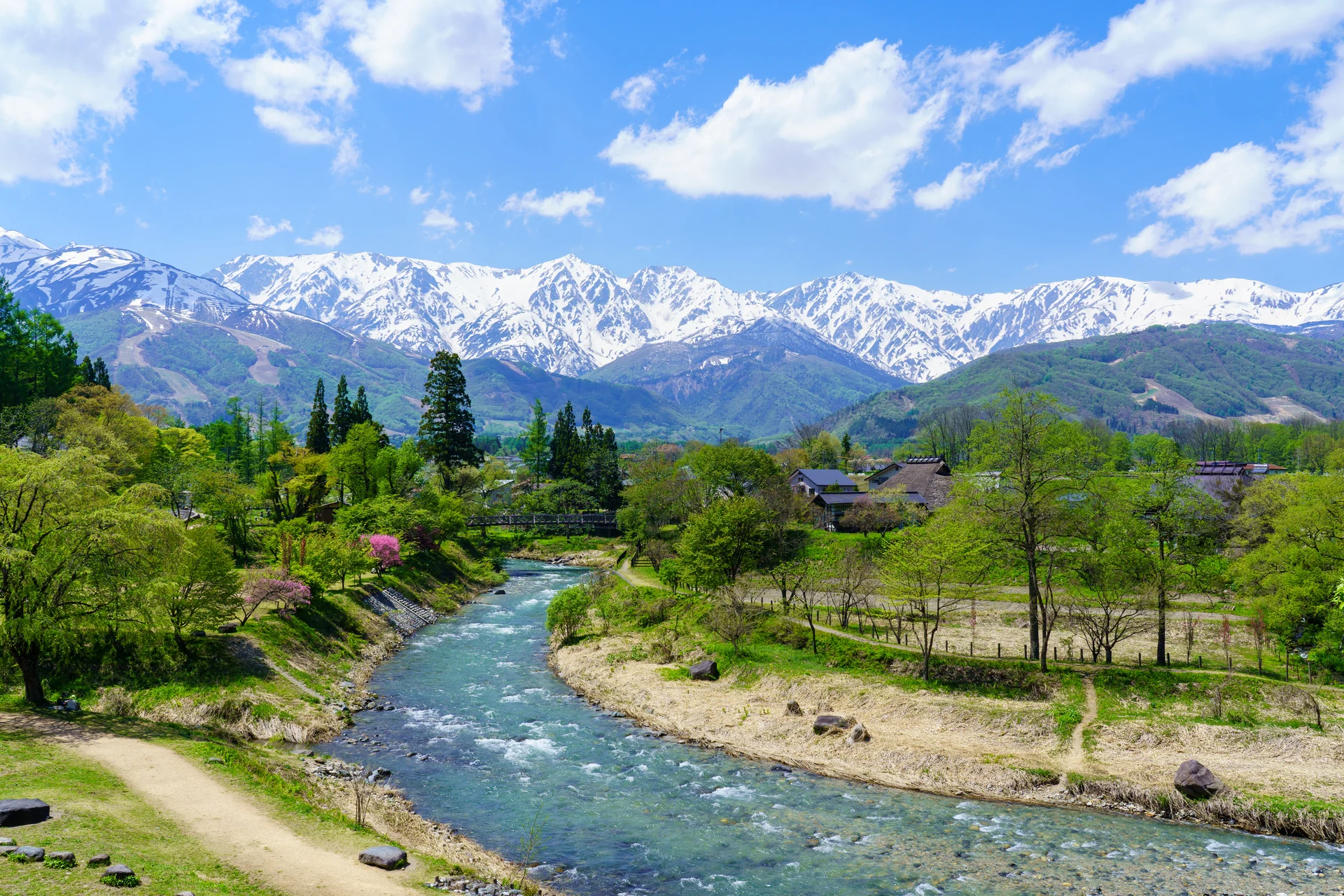
Ode Park, Hakuba: the Northern Alps, still capped with snow, beyond a riverside villagePhoto: SHori / CC BY 4.0 · source
REGIONAL GUIDE — JAPAN
Nagano Prefecture · Shinshu highlands
Forest walks and mountain views in the Shinshu highlands
Karuizawa's shaded lanes are dotted with art museums, Tateshina holds a lake and hot springs, and Hakuba looks up at the Northern Alps. Together they form a highland circuit spreading east, west and north across Nagano Prefecture, each with its own reason to stay.
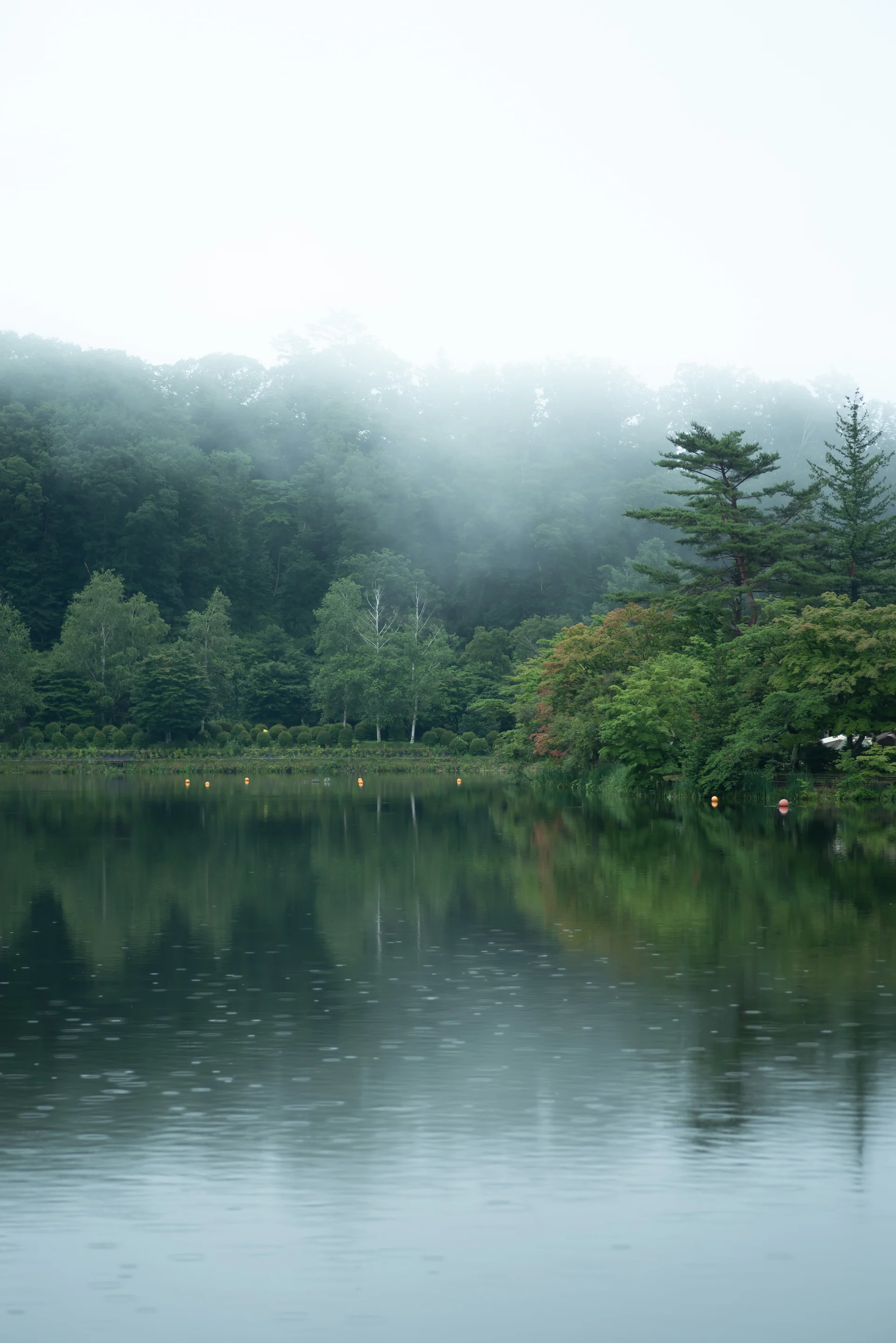
Lake Tateshina, Chino: trees and still water in morning mistPhoto: Akiko_Toshinai / CC BY 4.0 · source
The Shinshu highlands are a group of distinct resort areas in Nagano Prefecture rather than one destination: Karuizawa, known for forest villas, art museums and literary history; Tateshina and Kita-Yatsugatake, with a lake and a ropeway into the mountains; and Hakuba, at the foot of the Northern Alps, with alpine trails in summer and the HAKUBA VALLEY ski areas in winter. Investors look here because guests come for culture, mountains and snow, but access, seasons and operating conditions differ from one highland to the next and must be checked property by property.
Photos show the region, not properties for sale.
THE AREA
One highland at a time
Karuizawa, Tateshina and Hakuba share a prefecture but not a rhythm. The appeal of each is tied to its altitude, its terrain and the way the town grew, and the three are not within walking distance of one another. The guide suggests one base for a one-night trip, moving on to the next highland only when there is time for a travel day in between.
Karuizawa's forests keep the memory of summer villas and writers; Tateshina's lake mirrors the trees; in Hakuba the mountain slopes rise close to the road. A trip here need not mean only climbing or skiing. Look at paintings and then walk in the woods, watch the lake in the morning before returning to the hot spring, or eat soba in town and follow an old road.
Karuizawa has two layers of history: Oiwake-juku, a post town on the old Nakasendo road, and the summer resort that spread in the modern era. The writer Muro Saisei built a villa here in 1931 and spent every summer in it until 1961; Hori Tatsuo first visited in 1923, settled in Oiwake in 1944 and died there in 1953. In 1998 Hakuba's mountainsides became competition venues for the Nagano Winter Olympics.
PLACES TO KNOW
Six areas, six reasons to stay
The guide divides the highlands into six areas, each with a different reason to stay: museums and shaded lanes in Kyu-Karuizawa and Naka-Karuizawa, literary history in Oiwake, lake and mountain in Tateshina and Kita-Yatsugatake, alpine views in Hakuba, spring water and farmland in Azumino and Omachi, and places of faith in Nagano, Togakushi and Suwa. Distance from the station, museum closing days and winter conditions differ in each.
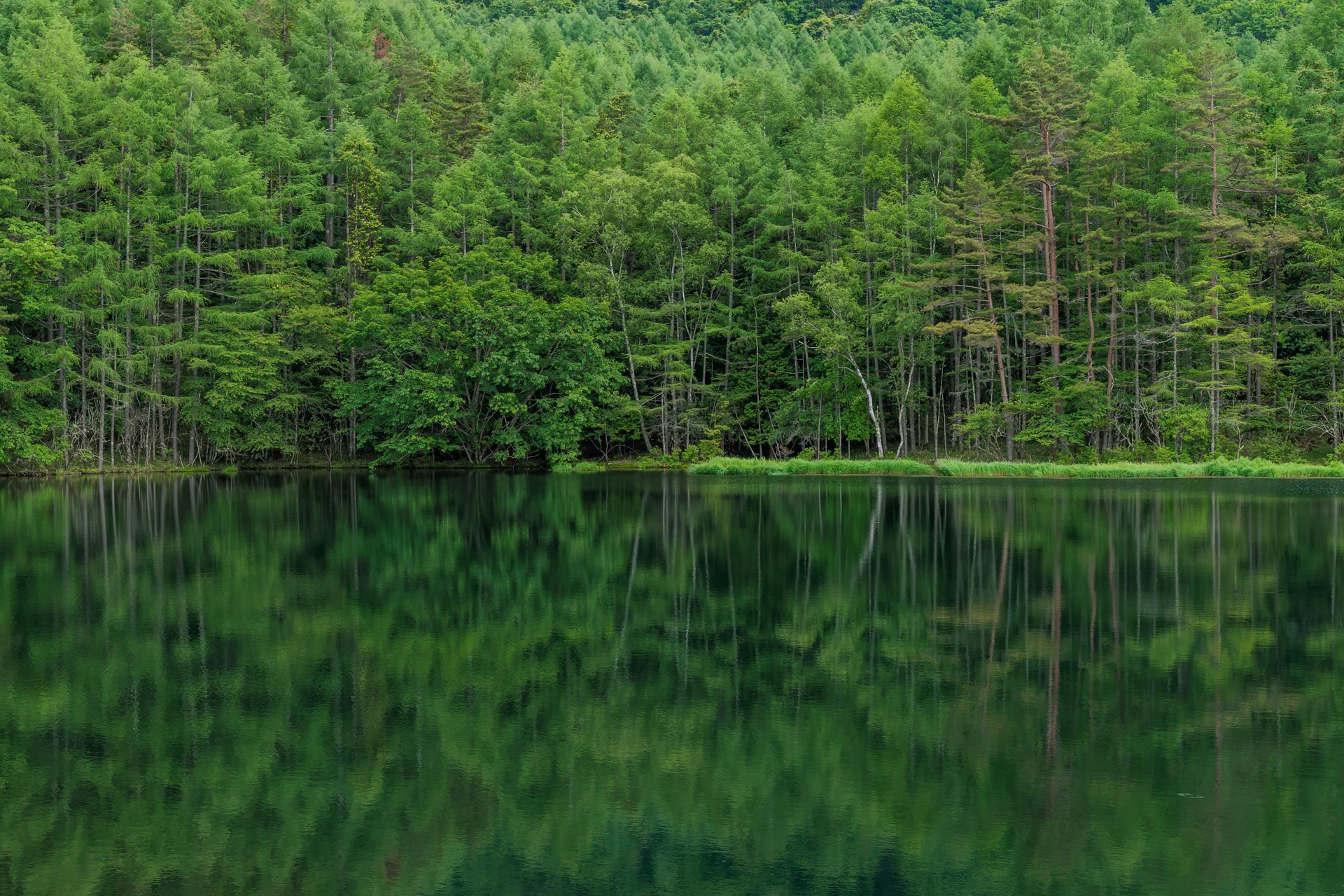
Mishaka Pond, Chino: green trees reflected on the waterPhoto: sheltyleif / CC BY 4.0 · source
01
Kyu-Karuizawa & Naka-Karuizawa
Busy shopping streets sit beside quiet forest paths that lead to Kumoba Pond. Museums such as the Karuizawa Senju Hiroshi Museum and the Karuizawa Picture Book Forest Museum invite unhurried visits, building and grounds included.
02
Oiwake
Walk the old Oiwake-juku post town on the Nakasendo, then see manuscripts, letters and the former residence at the Hori Tatsuo Memorial Museum of Literature. The Muro Saisei Memorial Museum, on a separate site, is open from 29 April to 3 November and closed in winter.
03
Tateshina & Kita-Yatsugatake
Lakeside walks at Lake Tateshina pair with the Kita-Yatsugatake Ropeway up to Tsuboniwa, where alpine plants grow among the rocks. Mishaka Pond in Chino, also an agricultural reservoir, is another option, though each spot needs its own transfer.
04
Hakuba & the Northern Alps foothills
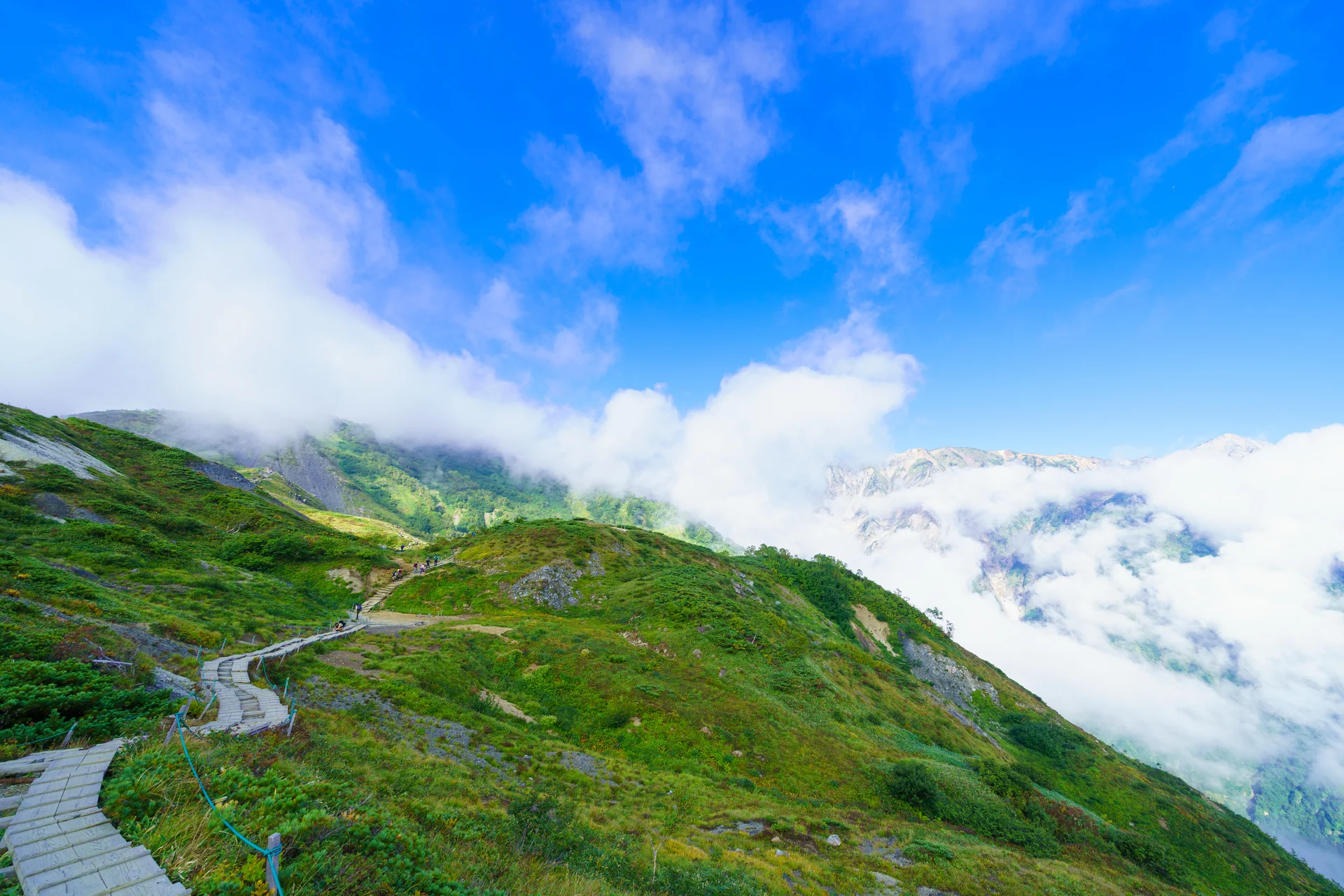
From Ode Park the mountains rise beyond the river and village. Summer days lead to the Happo-one Nature Trail and the Hakuba Goryu Alpine Botanical Garden; in winter the HAKUBA VALLEY ski areas take over.
05
Azumino & Omachi
Farmland, wasabi fields and irrigation channels such as the Jikkanzeki spread beneath the Northern Alps. Further on, Omachi offers a mountain-foot town and the Omachi Onsenkyo hot-spring area as a base.
06
Nagano, Togakushi & Suwa
Separate centres of faith rather than one route: Zenkoji temple and its gate town in Nagano, the five shrines and cedar-lined approach of Togakushi Shrine, and the four shrines of Suwa Taisha, which can be combined with a stay in Tateshina.
SEASONS & TRAVEL
From spring green to winter snow
Each season changes where time is best spent. Spring brings new green to Karuizawa's forests and Azumino's fields; summer suits Karuizawa's museums and Hakuba's alpine flowers; autumn colours the water at Kumoba Pond, Lake Tateshina and Mishaka Pond; winter centres on snow in Hakuba. Mountain weather changes quickly, and facilities in Karuizawa and Tateshina close or change hours in winter, so plans need room to adjust.
Happo-one Nature Trail, Hakuba: a boardwalk across green mountain slopesPhoto: SHori / CC BY 4.0 · source
Snow can linger on the heights in spring, so valley walks and mountain preparation are planned separately. Autumn colour arrives at different times with altitude; choosing one highland rather than chasing every view makes for a calmer trip. In Hakuba's winter, guests who ski and those who do not can meet again over meals or at a hot spring.
Sample itineraries in the guide are modest: one night in Karuizawa, one at Tateshina, or two in Hakuba so that a mountain day and a village day stay separate.
Prefecture-wide data show the same summer peak: in 2025 August was Nagano's busiest month, with 2,447,110 guest nights and room occupancy of 51.2%.
THE LODGING MARKET
Nagano's lodging market in official figures
Japan Tourism Agency statistics for the whole of Nagano Prefecture recorded 19,048,010 guest nights in 2025, with foreign guests accounting for 13.2%. Ryokan room occupancy was 27.2% and resort-hotel occupancy 37.7%. These are prefecture-wide totals: they describe neither Karuizawa, Tateshina or Hakuba alone nor the finances of any single property, so a property's own booking records should be read alongside them.
2,656 As of 31 March 2025 (end of FY2024) · source
BUYING & RUNNING AN INN HERE
What to check before taking over an inn
Running an inn here means organising conditions season by season. Arrival differs between Hakuba's snow, Tateshina's mountain roads and Karuizawa's winter, so snow clearing, ice, shuttles and heating all need a plan. Museum closures change what guests can do nearby, and prefecture-wide demand cannot stand in for a property's own records. Licences, hot-spring rights and financing should be confirmed with the authorities and licensed professionals.
01
Snow, ice and arrival
Rather than judging by views or altitude, set out for each season who clears snow and runs shuttles, how freezing is prevented and how early-morning departures are handled.
02
Gear and drying space
Ski equipment, hiking boots and wet clothing need somewhere to go, and requirements change between summer climbers leaving early and winter skiers.
03
Building condition
Check insulation, water supply and drainage, and heating against the building itself and its inspection records.
04
Closures and quiet neighbourhoods
Museums and literary houses close on set days or for the winter. Confirm walking routes and evening movement, and keep shuttles and luggage handling from disrupting villa and residential streets.
05
Demand by property, not by prefecture
Do not estimate occupancy from fame or prefecture-wide visitor numbers. Review actual bookings, length of stay and results by day of week and season, public-transport links, and whether meals are served in-house or at local restaurants.
06
Licences, hot springs and finance
Business licences under the Inns and Hotels Act (旅館業法), hot-spring rights and permits under the Hot Springs Act (温泉法), the choice of operator, and acquisition, renovation and working capital all need confirming with Nagano's licensing offices and licensed professionals.
FAQ
Questions from overseas buyers
This is a broad regional guide to the Shinshu highlands and does not identify any property for sale. Its market data cover all of Nagano Prefecture, not individual towns. Listings on TSUNAGU are grouped by the wider Chubu region, and details are confirmed in dialogue with the seller and TSUNAGU staff. For licences, tax and legal questions, check with the authorities and a licensed professional.
Which areas does this guide cover?
Karuizawa, Tateshina, Hakuba and the Shinshu highlands: Kyu-Karuizawa and Naka-Karuizawa, Oiwake, Tateshina and Kita-Yatsugatake, Hakuba and the Northern Alps foothills, Azumino and Omachi, and side trips to Nagano, Togakushi and Suwa. It does not indicate where any listed property is.
Are the photographed places or featured facilities for sale?
No. The photographs show regional scenery, culture and food, with the location credited. They do not show properties for sale or imply any business relationship with the facilities mentioned.
Are the market figures specific to Karuizawa or Hakuba?
No. They are the Japan Tourism Agency's confirmed 2025 figures for the whole of Nagano Prefecture. Figures for individual towns or properties need to be checked separately.
How do I find an inn for sale in this area?
Browse TSUNAGU's public listings for the Chubu region, which are not limited to this area, or register your purchase conditions. Detailed terms are confirmed in dialogue with the seller and TSUNAGU staff.
Reviewed by Masayuki Tsutsumi, Representative Director, Japan Realtor Co., Ltd. · Updated 2026-10-29 · Masayuki Tsutsumi
NEXT STEP
Tell us what you are looking for
Membership is currently limited. Register your interest or speak with our advisory team; a first enquiry needs only an email address.