01
Higashiyama, Kiyomizu & Fushimi
The view from the stage of Kiyomizu-dera, sloping temple-town streets and the torii-lined paths of Fushimi Inari Taisha. Slopes, steps and gravel make a plan for luggage welcome.
REGIONAL GUIDE — JAPAN
Kyoto & Shiga Prefectures
Riverside Arashiyama, the temple approaches of Higashiyama, the canal that runs past Nanzen-ji and the wide water of Lake Biwa. Kyoto and the lake country of Shiga are bound together by pilgrim roads and by the work of water.
OVERVIEW
This guide covers Kyoto and the Lake Biwa shore in neighbouring Shiga: Higashiyama and Fushimi, Okazaki and Nanzen-ji, Saga-Arashiyama, Yunohana Onsen in Kameoka, Otsu with Katata and Ogoto, and Omi-Hachiman. Investors look here because the reasons to stay are so varied — temple quarters in the city, a hot-spring village in the hills and lakeside onsen towns — and because Kyoto Prefecture recorded 33,157,290 guest nights in 2025, 55.2% of them by foreign guests. Those are prefecture-wide figures, not the results of any single inn.
Photos show the region, not properties for sale.
THE AREA
Kyoto need not be a race between famous sights. The source suggests giving each district its own day — Arashiyama's riverbanks, the Higashiyama approach to Kiyomizu-dera, Nanzen-ji and its canal — and adding a night in the hot-spring village of Yunohana or on the Lake Biwa shore. Water ties it together: the canal that carried Lake Biwa's water to Kyoto, and the Hachiman-bori canal that once carried trade.
Spend unhurried time in one district and you start to notice the mountains and water behind the buildings. A night at Yunohana Onsen, in the hills west of central Kameoka, offers a quiet quite different from the city: dinner and a long soak in a mountain village.
On the Shiga side wait the temples and lakeshore of Otsu and the canal-side streets of Omi-Hachiman. Rather than covering Kyoto and the lake country in one day, two nights give each its own day. Meals follow the place: Kyoto's seasonal vegetable dishes, saba-zushi (cured mackerel sushi) tied to the old road from Wakasa, Omi beef, lake fish and Shiga's fermented funa-zushi.
History adds depth. In 1606 Suminokura Ryoi set to work opening the Hozu River gorge to boats, linking Tanba with Kyoto. The first Lake Biwa Canal was completed in 1890 and the second in 1912, with Tanabe Sakuro as chief engineer; in 2018 canal boats returned to full service after 67 years. The Hachiman-bori canal carried local commerce until the early Showa era.
This is a regional guide. The photographs show the area's landscapes and culture; they are not properties for sale and do not indicate the location of any listing.
PLACES TO KNOW
The area falls into six districts, each with its own reason to stay: temple approaches in Higashiyama and Fushimi; modern waterworks in Okazaki and Nanzen-ji; river and village scenery in Saga-Arashiyama; a mountain hot spring at Yunohana in Kameoka; lake and literature in Otsu, Katata and Ogoto; and canals, storehouses and farmland around Omi-Hachiman. Access, walking and seasonal conditions differ in each.
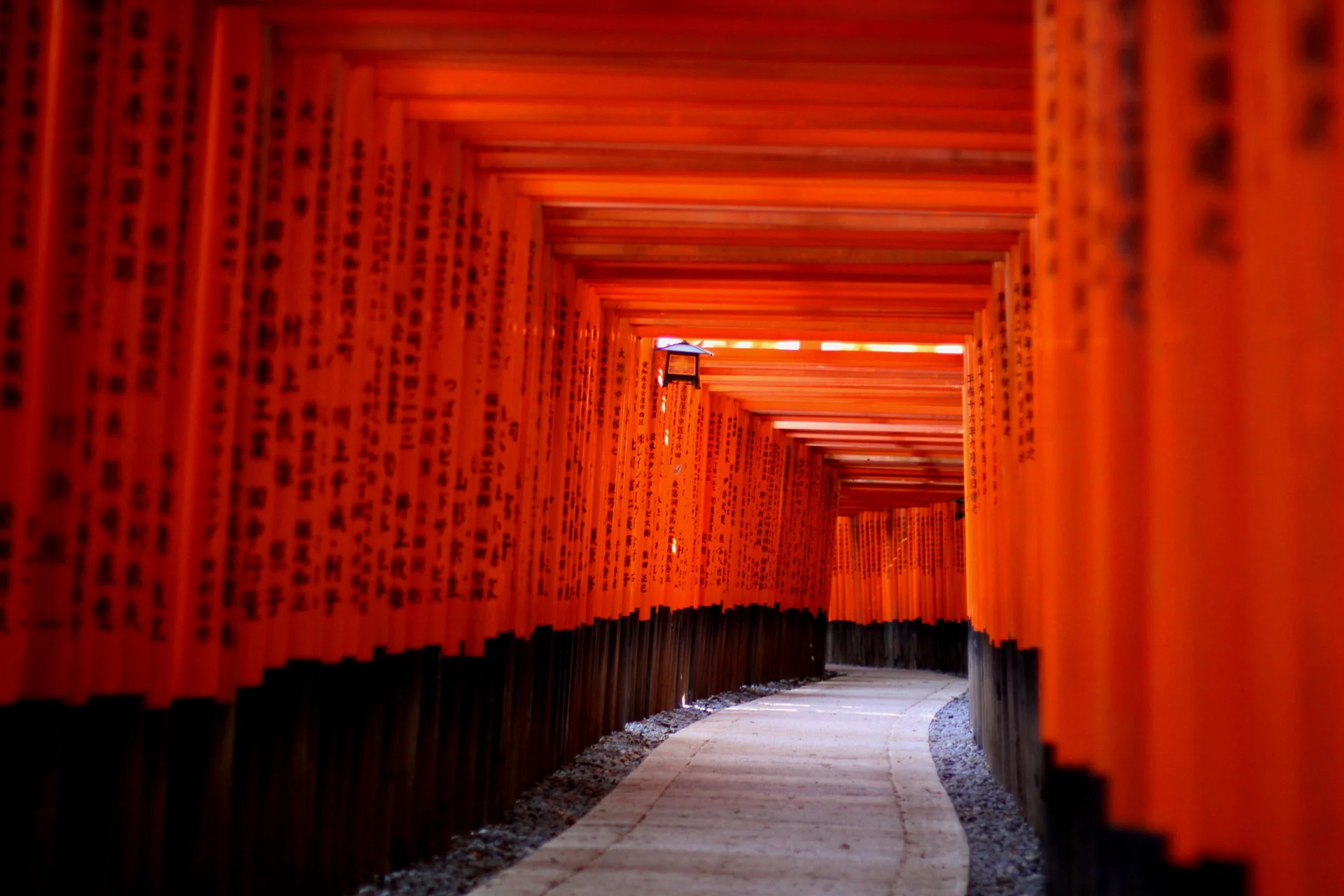
The view from the stage of Kiyomizu-dera, sloping temple-town streets and the torii-lined paths of Fushimi Inari Taisha. Slopes, steps and gravel make a plan for luggage welcome.
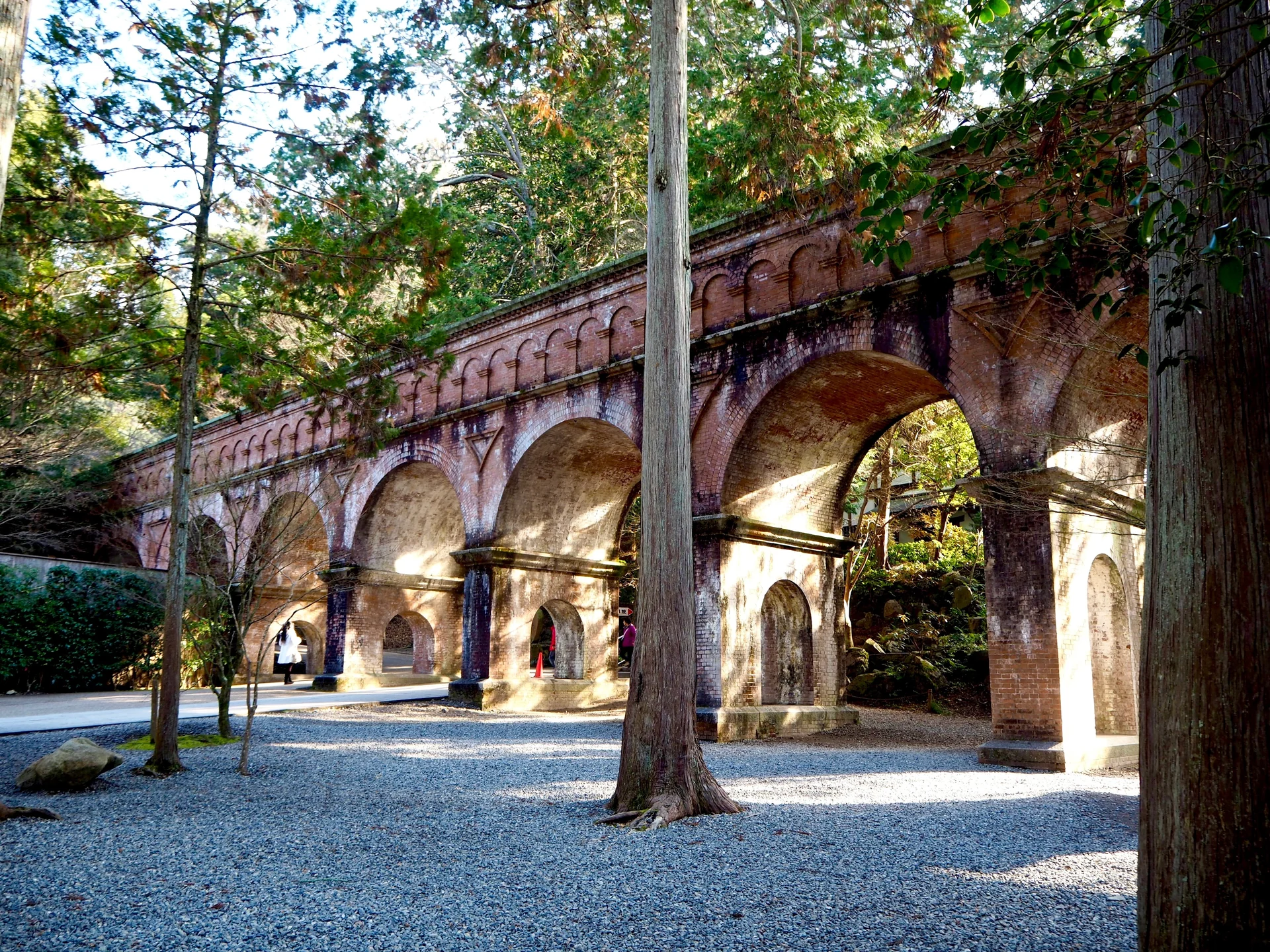
At Nanzen-ji the brick Suirokaku aqueduct runs through the temple grounds beside its gardens — modern waterworks inside an old place of prayer.
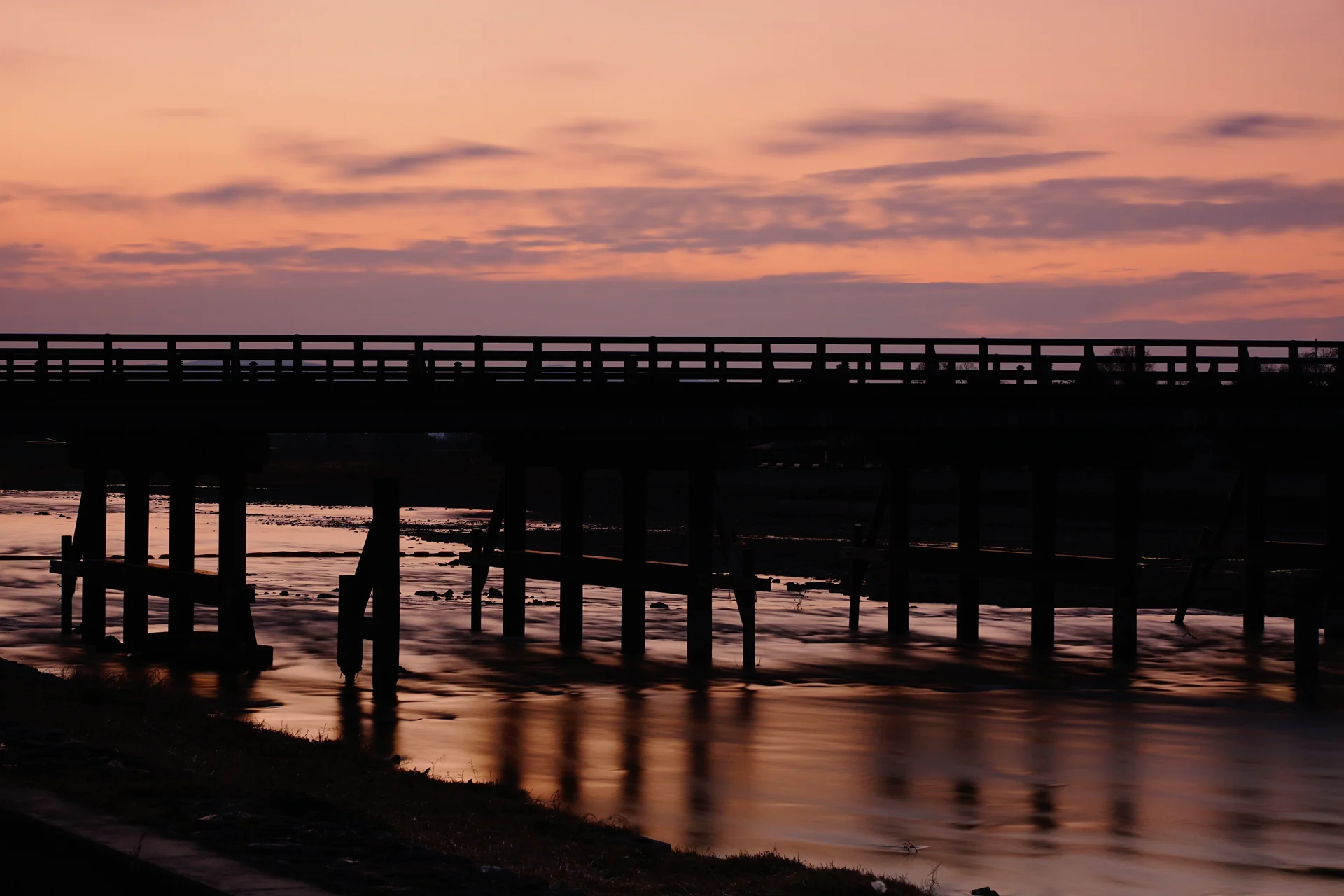
From Togetsukyo Bridge the eye takes in mountain and river together; walk on into Saga and the scene shifts to villages such as Saga-Toriimoto, where townhouse- and farmhouse-style buildings stand side by side.
A hot-spring village in the hills west of central Kameoka, and the starting point of the Hozu River boat ride down to Arashiyama. The spa and the boat landing are in different places.
Ishiyama-dera with its Murasaki Shikibu legend, the Ukimido hall at Katata, the poet Basho's Genjuan hermitage and the lakeside onsen town of Ogoto. These are separate bases, each with its own transport.
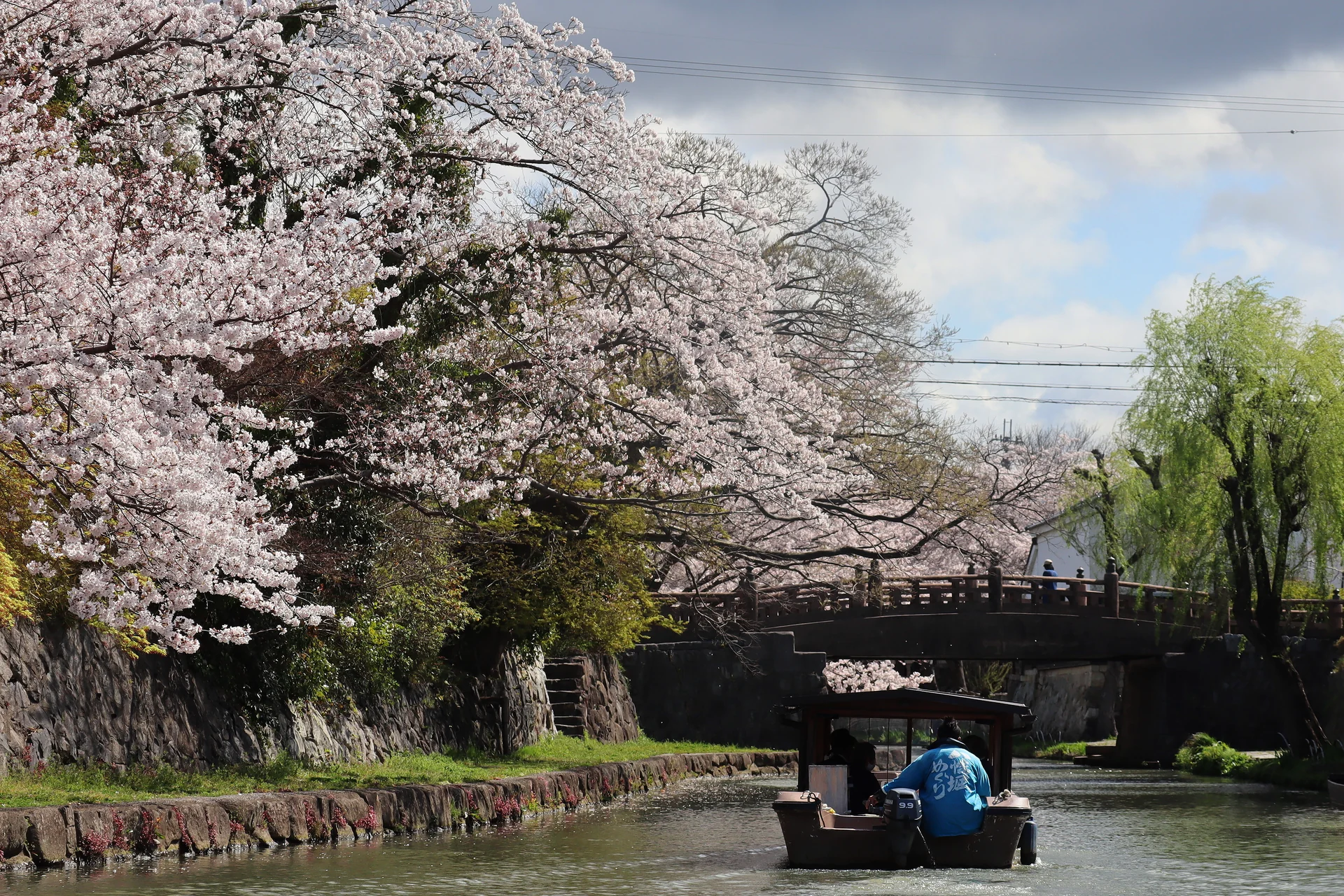
Storehouses and old merchant houses line the Hachiman-bori canal, seen on foot or by boat. Beyond the town, fields of rice, wheat and soybeans feed the lake country.
SEASONS & TRAVEL
Each season points to different places. Spring colours Arashiyama, Hachiman-bori and Ishiyama-dera; summer suits the Hozu River boats, Nanzen-ji's waterway and the Lake Biwa shore; autumn turns the trees of Saga and Ishiyama; and winter favours the baths and tables of Yunohana and Ogoto. In 2025 Kyoto Prefecture's busiest month was May, and its highest monthly room occupancy came in October.
In spring and summer, boat trips and lake activities depend on each operator's weather decisions, and the lakeshore and the hills differ in temperature, so guests should dress for the base where they sleep. In the hottest hours, exhibitions and meals offer shelter; mornings and evenings are for walking.
Autumn is for walking and reading: Ishiyama-dera's exhibitions on Murasaki Shikibu and The Tale of Genji, and Basho's hermitage, fit the season. In winter, short outdoor legs, daytime visits to the culture of Kyoto and Otsu and warm evenings at Yunohana or Ogoto make for a calm stay.
THE LODGING MARKET
Japan Tourism Agency figures for 2025 give a prefecture-wide picture. Kyoto Prefecture recorded 33,157,290 guest nights, 55.2% of them by foreign guests, while ryokan room occupancy stood at 41.7%. Neighbouring Shiga recorded 4,833,790 guest nights. These figures describe each prefecture as a whole — not Arashiyama, Yunohana or Lake Biwa alone, and never the income of an individual property.
| Guest nights, Kyoto Prefecture | 33,157,290 2025 (Jan–Dec), confirmed · source |
|---|---|
| Share of guest nights by foreign guests, Kyoto Prefecture | 55.2% 2025 (Jan–Dec), confirmed · source |
| Ryokan room occupancy, Kyoto Prefecture | 41.7% 2025 (Jan–Dec), confirmed · source |
| Licensed lodging facilities (three categories), Kyoto Prefecture | 4,657 as of 31 March 2025 (end of FY2024) · source |
| Guest nights, Shiga Prefecture | 4,833,790 2025 (Jan–Dec), confirmed · source |
BUYING & RUNNING AN INN HERE
Charm and operations have to be checked together. Central Kyoto, Yunohana, Ogoto and Omi-Hachiman each have different arrival and walking conditions, so test transfers, luggage, slopes and pick-ups on real itineraries. Read each property's own records for hot-spring use, baths, hot water, damp, leaks and kitchen repairs; a lake view or a famous onsen name says nothing about a building's condition. This is a checklist, not legal advice.
Confirm connections, luggage, slopes and pick-up bookings on actual routes, and do not present separate bases as one walkable area. If guests are sent to early-morning worship or out to dinner, match in-house service hours to the last transport back.
Temples, old townscapes, canals and lakeshores are places of prayer and daily life. Give guests concrete rules on photography, private land, night-time and vehicles, and check each site's normal opening conditions. For crafts, guides or boats, check each partner's booking and cancellation terms.
Check the conditions for using the hot-spring source, inspections of baths and hot-water supply, damp and leaks, and the kitchen's repair history. Do not treat views or the area's popularity as assured sales.
Inn operation falls under the Inns and Hotels Act (旅館業法) and hot-spring use under the Hot Spring Act (温泉法); Kyoto and Shiga each have their own prefectural and health-centre contacts for licence succession. Confirm fire-safety and building requirements with the authorities and a licensed professional.
Estimate acquisition, renovation and working capital; decide between running the inn yourself or contracting an operator; and plan local food sourcing and rainy-day options for guests.
FAQ
In short: the guide covers six districts across Kyoto and neighbouring Shiga; the photographs show the region and are not listings; the market figures are prefecture-wide official statistics, not results for any area or inn; and licensing, tax and legal questions belong with the authorities and a licensed professional. Owners can talk to TSUNAGU privately before deciding to sell.
Six districts: Higashiyama-Kiyomizu-Fushimi, Okazaki-Nanzen-ji, Saga-Arashiyama, Kameoka-Yunohana Onsen, Otsu-Katata-Ogoto and Omi-Hachiman with the Koto countryside. It is a broad guide and does not show where any listing is located.
No. They are credited reference images of landscapes and culture, and imply no business relationship with the places shown or any property for sale.
No. They are prefecture-wide totals from the Japan Tourism Agency's confirmed 2025 statistics. Figures for a single area, a municipality or an individual property must be checked separately.
Inn operation is licensed under the Inns and Hotels Act, and hot-spring use is governed by the Hot Spring Act; Kyoto and Shiga each have their own contact offices. Requirements depend on the property, so check with the authorities and a licensed professional.
Yes. You can start from current operations, facility issues and hopes for the next operator, using a private draft or the consultation desk.
Reviewed by Masayuki Tsutsumi, Representative Director, Japan Realtor Co., Ltd. · Updated 2026-10-29 · Masayuki Tsutsumi
NEXT STEP
Membership is currently limited. Register your interest or speak with our advisory team; a first enquiry needs only an email address.