01
Naha: markets and Tsuboya
Shopping streets and markets bring food and daily life close, and the Tsuboya yachimun street is lined with pottery shops. The Tsuboya Pottery Museum is scheduled to close temporarily from September 2026 to March 2027.
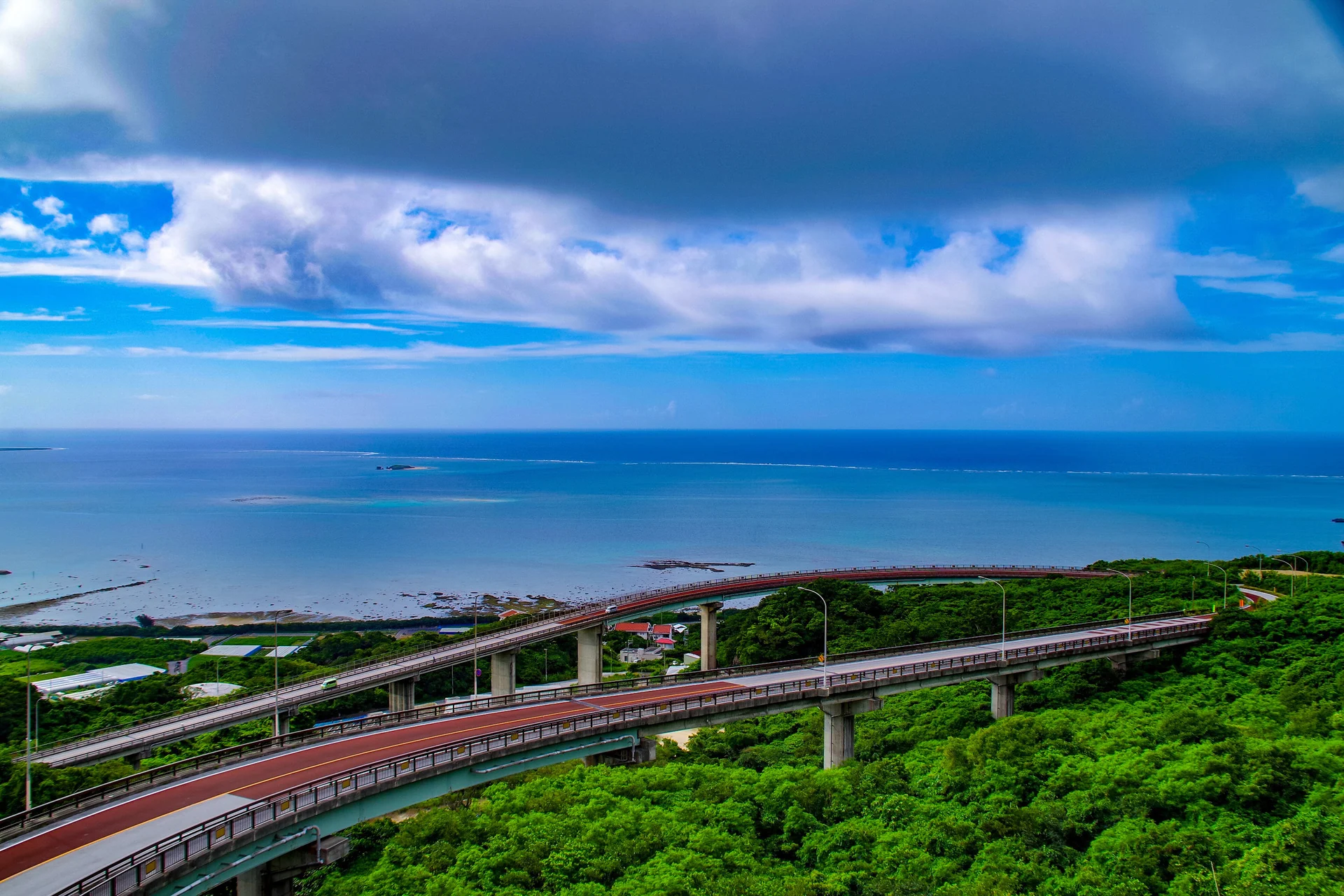
REGIONAL GUIDE — JAPAN
Okinawa Prefecture · main island, Miyako and Yaeyama islands
Onna's coast, Bise's fukugi-tree lanes, Naha's markets and the memory of Shuri on the main island; Miyako's beaches, Ishigaki's bays, Taketomi's red-tiled village and Iriomote's mangroves further south. Okinawa is not one destination but several, each reached, and run, in its own way.
OVERVIEW
This guide covers two separate travel circuits in Okinawa Prefecture: the main island (Naha, Shuri, Onna, Motobu, Nakijin, Yomitan and Nanjo) and the Sakishima islands, meaning the Miyako group and the Yaeyama group around Ishigaki, Taketomi and Iriomote. Prefecture-wide, Okinawa recorded 33,862,060 guest nights in 2025 (confirmed), 27.2% of them by foreign guests, and resort hotels ran at 66.6% room occupancy. Investors should judge each island and district on its own access, seasons and results.
Photos show the region, not properties for sale.
THE AREA
On the main island, the source suggests choosing one base and alternating days by the sea with days of markets, crafts and history, rather than packing the trip from Naha to the north into a string of short hops. Miyako and Ishigaki are not neighbouring sights but the hubs of different island groups, reached by plane or boat; staying longer on one island is the recommended rhythm.
Shuri holds the memory of the Ryukyu Kingdom and the story of its reconstruction; the south holds sacred places and facilities for learning about the Battle of Okinawa and peace. Yachimun pottery, Okinawa soba and island vegetables link the scenery to everyday life, and the opening of Shuri Castle and cultural facilities changes over time, so plans are built around what can be visited now.
In the Sakishima islands, the way you travel differs from the start: in Miyako you cross bridges to neighbouring islands, while in Yaeyama you take boats from Ishigaki. The forests and rivers of Iriomote, the village of Taketomi, and Miyako's stone walls and utaki (sacred sites) carry living culture. Nature is best explored with guides, and villages and places of worship visited with respect.
The photographs on this page show the region's landscapes, culture and food. They are not properties for sale.
PLACES TO KNOW
On the main island, the guide distinguishes Naha's markets and Tsuboya, the former royal capital of Shuri, the Onna coast, Motobu and Bise in the north, Nakijin and Yomitan, and Nanjo in the south. In the Sakishima islands it separates Ishigaki, Miyako with its bridged islands, and the Yaeyama islands such as Taketomi and Iriomote, each with its own transport and rhythm.
Shopping streets and markets bring food and daily life close, and the Tsuboya yachimun street is lined with pottery shops. The Tsuboya Pottery Museum is scheduled to close temporarily from September 2026 to March 2027.
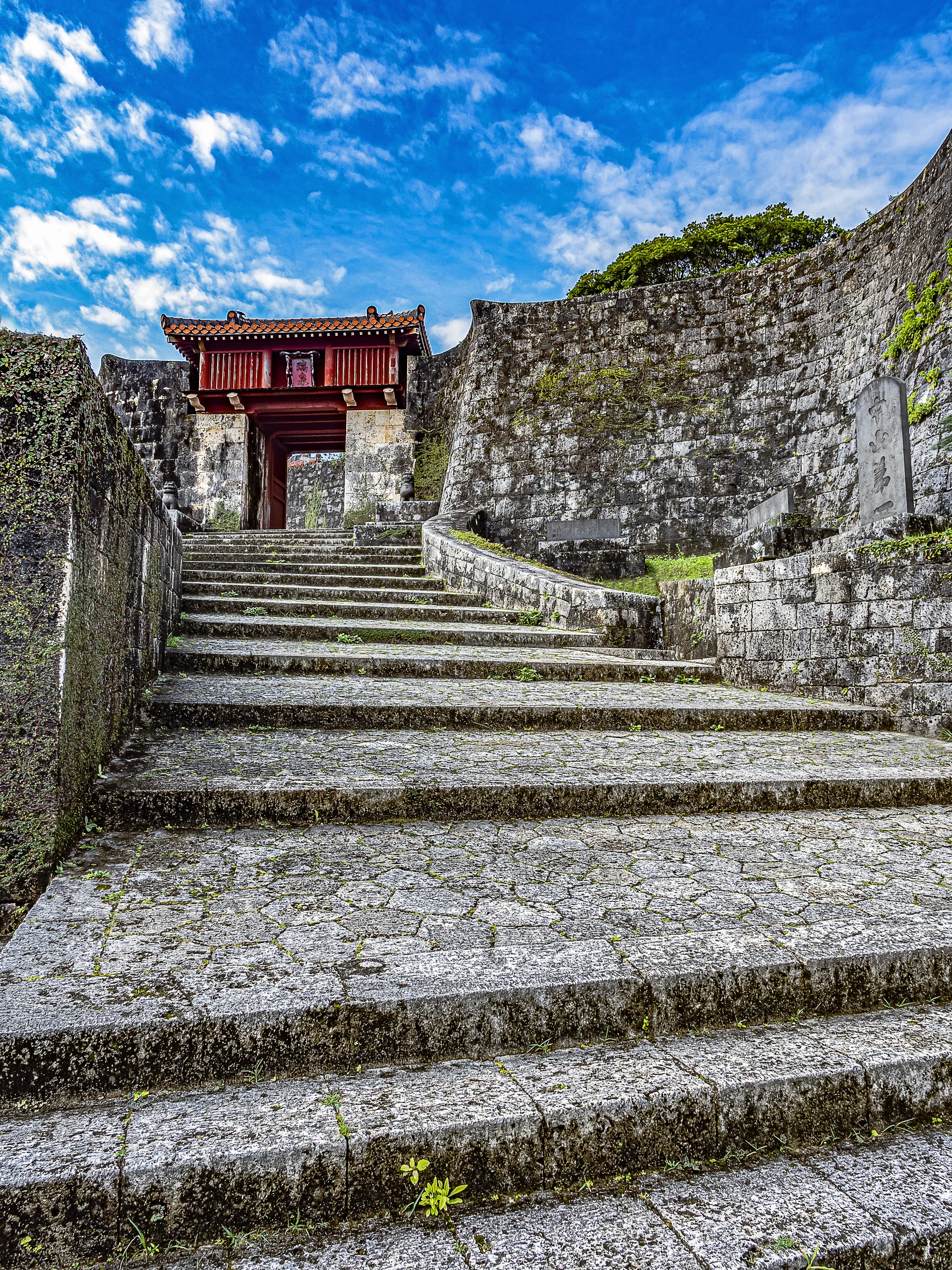
Gates, stone walls and places of prayer of the Ryukyu Kingdom stand close together on the heights. After the 2019 fire, the prefecture announced that general public use of the Seiden main hall is scheduled to begin on 23 November 2026 (as of 28 October 2026).
A coast for staying put: watching the sea from your base, seeing the rock and cliff forms of Manzamo, and saving another day for crafts such as Yomitan's yachimun.
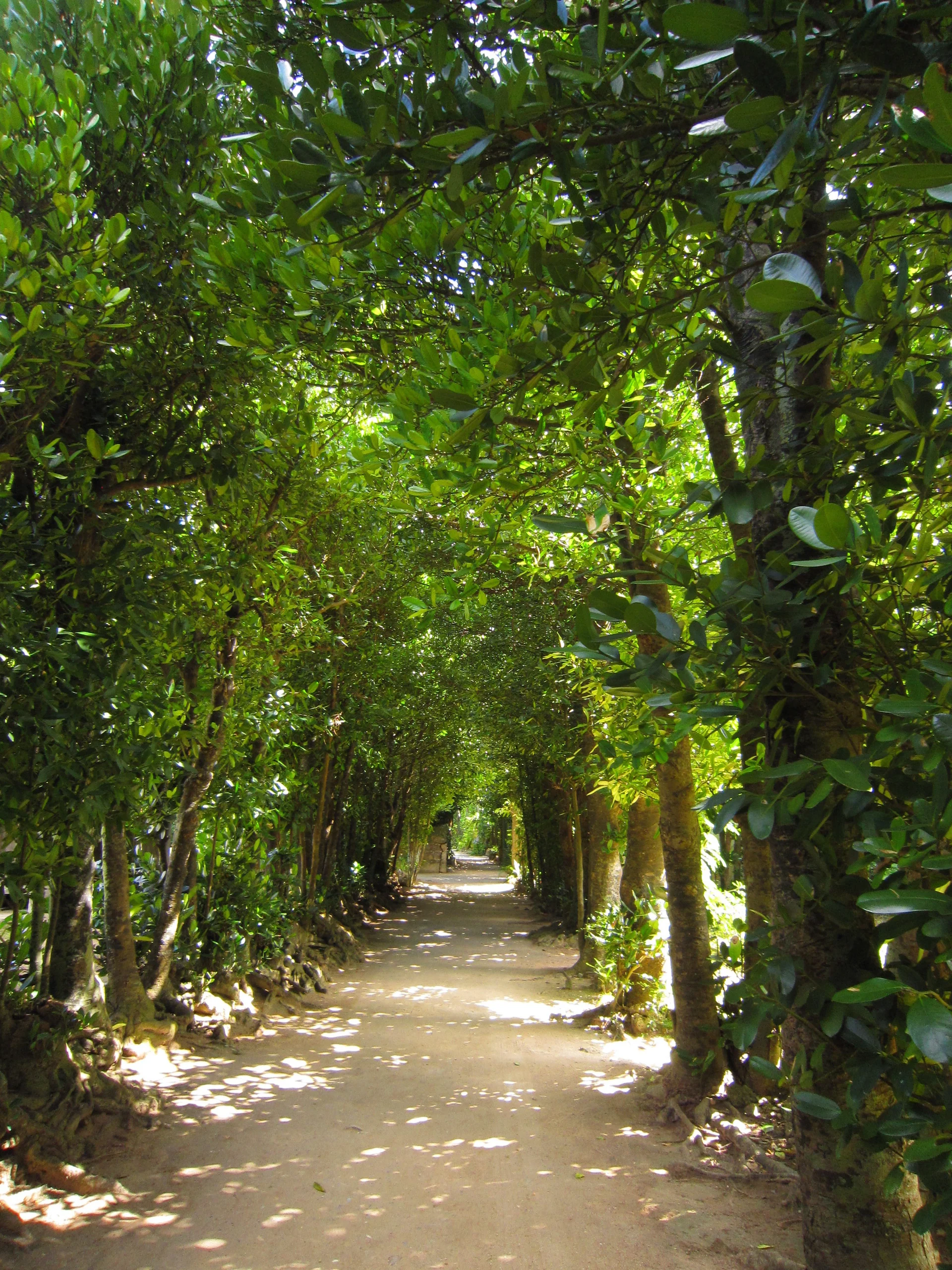
Ocean Expo Park and the Okinawa Churaumi Aquarium, the fukugi-tree lanes of Bise village, and the stone walls of Nakijin Castle ruins. The source suggests spending a night in the north rather than rushing back to Naha.
Sefa-utaki, a sacred site with partial access restrictions announced for fiscal 2026, and the Okinawa Prefectural Peace Memorial Museum each deserve unhurried time of their own.
The boat hub of Yaeyama, with a harbour town, Kabira Bay, views in the north of the island and Torin-ji temple, introduced by the official tourism guide as founded in 1614.
Yonaha Maehama beach, the town of Hirara with Harimizu Utaki and its stone-paved path, Miyako soba, and bridges to Irabu, Shimoji and Kurima.
Taketomi's red-tiled houses, stone walls and white-sand lanes, selected as a preservation district in 1987; Iriomote's mangrove rivers and forests, explored with guides; and islands such as Kohama, Kuroshima, Hateruma and Hatoma, each different.
SEASONS & TRAVEL
The source frames each season around where to spend time. Spring suits walking Naha, Shuri, Bise and island villages; summer means one activity a day with long rests; autumn suits crafts, food and village culture; winter turns to towns, museums and sea views. Typhoons, wind and sea conditions can change flights and boats, so leave room between travel days and activity days.
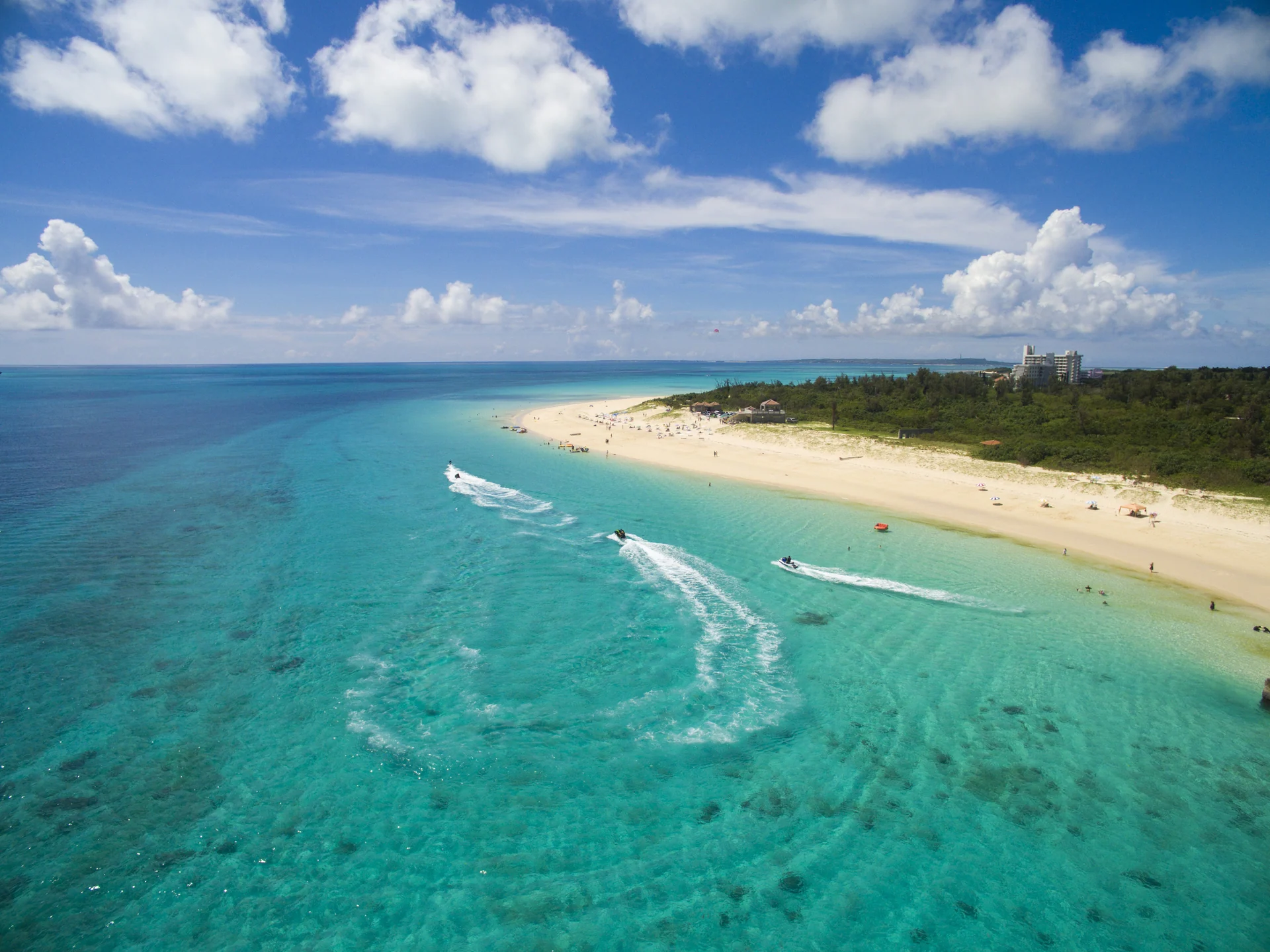
On the main island, spring is for walking: Naha's streets, Shuri and the shade of Bise. Summer days by the sea need breaks from the strong sun and indoor time at the aquarium or museums, with typhoon disruption to transport in mind. Autumn suits yachimun shops and Naha's markets, and winter, when the wind changes how warm it feels, suits Shuri, Naha's culture, the aquarium and a separate day in the south to learn about peace.
In Miyako and Yaeyama, typhoons and sea conditions can change boats and flights in summer, and in winter wind and waves alter sailing conditions, so stays are shaped around the operators' notices rather than assuming the usual timetable. Festivals and rituals are not always staged for visitors, and the guide asks travellers to respect local guidance.
Editorial itineraries include Naha and Shuri for markets, pottery and history; two nights on the west coast alternating sea and crafts; a night in the north for the aquarium, Bise and Nakijin; about two nights in Ishigaki with a day on Taketomi; a night or more on Iriomote; and about two nights in Miyako. Island tables offer Okinawa, Yaeyama and Miyako soba, sea grapes, tofuyo, sata andagi, awamori, Ishigaki beef, island kamaboko, mangoes and brown sugar.
THE LODGING MARKET
Japan Tourism Agency figures for 2025 (confirmed) show 33,862,060 guest nights across Okinawa Prefecture, 27.2% of them by foreign guests. Resort hotels ran at 66.6% room occupancy and all lodging types at 60.3%. These are prefecture-wide totals covering the main island and the outer islands together, not results for any district, island or individual property.
| Guest nights, Okinawa Prefecture | 33,862,060 guest nights 2025 (Jan–Dec), confirmed · source |
|---|---|
| Share of guest nights by foreign guests | 27.2% 2025 (Jan–Dec), confirmed · source |
| Room occupancy, resort hotels | 66.6% 2025 (Jan–Dec), confirmed · source |
| Room occupancy, all lodging types | 60.3% 2025 (Jan–Dec), confirmed · source |
| Licensed lodging facilities under the Inns and Hotels Act (three categories) | 7,612 facilities As of 31 March 2025 (end of FY2024) · source |
BUYING & RUNNING AN INN HERE
Running a hotel or inn here starts with not confusing places: the north and south of the main island, Miyako and Yaeyama each have different access, supply and weather conditions. Do not infer one island's demand from the prefecture's popularity; check results by district, season and day of the week. Typhoons, salt air and local rules on nature and sacred sites belong in the plan. This is a checklist, not legal advice.
The main island and the Sakishima islands differ in flights and boats, and travel between the north and south of the main island takes time. Confirm where each photo and experience actually is, how guests arrive from the airport, and results by district, season and weekday.
Even among boat-served islands, routes, ports and cancellation conditions differ. Follow how guests arrive and how food and linen are delivered, and check communications, payments and waste handling for each facility.
Prepare how guests are told about flight or activity cancellations, indoor places to spend the day, and extended stays and meals. In buildings exposed to salt wind and weather, review inspection and repair records for air conditioning, exterior equipment and water supply and drainage.
Iriomote's nature activities, Taketomi's village and utaki have conditions linked to conservation and daily life. Separate the inn's own services from local activities, and state organisers, access limits and booking conditions clearly.
Viewing conditions change with Shuri Castle's reconstruction and museum renovations. Reflect official opening ranges and update dates in pre-arrival guidance rather than reusing old travel information.
Confirm the transfer of a licence under the Inns and Hotels Act (旅館業法), any Hot Spring Act (温泉法) permissions, building and fire-safety compliance, and staffing with Okinawa's licensing offices and licensed professionals. Estimate acquisition, renovation and working capital together, and choose between self-operation and an operator.
FAQ
Short answers drawn from this guide. The market figures cover all of Okinawa Prefecture, the photographs are not listings, and the main island and the outer islands should be assessed separately. Anything legal, tax-related or specific to a property should be confirmed with the relevant authorities and a licensed professional. Where this guide is silent, the answer should come from the seller, the authorities or a professional, not from assumption.
On the main island: Naha's markets and Tsuboya, Shuri, Onna and the west coast, Motobu and Bise, Nakijin and Yomitan, and Nanjo and the south. In the Sakishima islands: Ishigaki, Miyako, the bridged islands of Irabu, Shimoji and Kurima, Taketomi, Iriomote and other Yaeyama islands. It does not indicate where any listing is located.
No. They are reference photographs of regional landscapes, culture and food, with the place of each shot stated. They imply no business relationship with any facility shown.
No. They are the Japan Tourism Agency's 2025 confirmed figures for the whole of Okinawa Prefecture. They are not totals for a district, municipality, island or individual facility.
The guide treats them as separate circuits. Flights, boats, ports and cancellation conditions differ, and Miyako and Yaeyama are different island groups. Judge each property on its own island's access, supplies and results.
Typically a licence under the Inns and Hotels Act and, where hot springs are used, permissions under the Hot Spring Act. Requirements depend on the property, so check with the local public health centre and a licensed professional.
Reviewed by Masayuki Tsutsumi, Representative Director, Japan Realtor Co., Ltd. · Updated 2026-10-29 · Masayuki Tsutsumi
NEXT STEP
Membership is currently limited. Register your interest or speak with our advisory team; a first enquiry needs only an email address.