

01
Kannawa and central Beppu
Steam rises between roofs in Kannawa, with the jigoku (hell) viewing sites, communal baths and steam-cooking workshops close together. Central Beppu is a hot-spring city with a station, port and everyday urban life.
REGIONAL GUIDE — JAPAN
Oita & Kumamoto Prefectures · Kyushu
Steam drifts through the lanes of Kannawa, Yufuin wakes beneath Mt Yufu, and the Kuju and Aso highlands open into grassland. Further on lie the bathing villages of Kurokawa and Tsuetate and the island coast of Amakusa. Each is best taken one stay at a time.
OVERVIEW
This guide covers two neighbouring circuits in Kyushu: Beppu, Yufuin and Kuju in Oita Prefecture, and Aso, Kurokawa, Tsuetate and Amakusa in Kumamoto Prefecture. Together they range from a hot-spring city where steam reaches the kitchen to basin and highland onsen towns, farmed volcanic grassland and fishing villages with a long history of faith. For investors, each sub-area has different access, guest behaviour and equipment needs, from geothermal steam to sea air, and the source treats each as a separate place to stay.
Photos show the region, not properties for sale.
THE AREA
In Beppu, hot-spring heat appears not only in baths but in kitchens and street views; in Kannawa, food is steamed over the springs. Yufuin sits in a basin below Mt Yufu, and Kuju and Aso offer grassland and wetland. Amakusa adds islands, bridges and fishing villages. The source stresses that Aso, Kurokawa and Amakusa are not one short-distance onsen area: each deserves its own nights.
Beppu's history is more than its springs. Aburaya Kumahachi is presented by the city as a figure who built up local tourism: he founded the Kamenoi Ryokan in 1911 and established Kamenoi Motor in 1928, joining lodging, buses and guiding. Beppu's tourism association also names Murakami Ayame as Japan's first female bus guide.
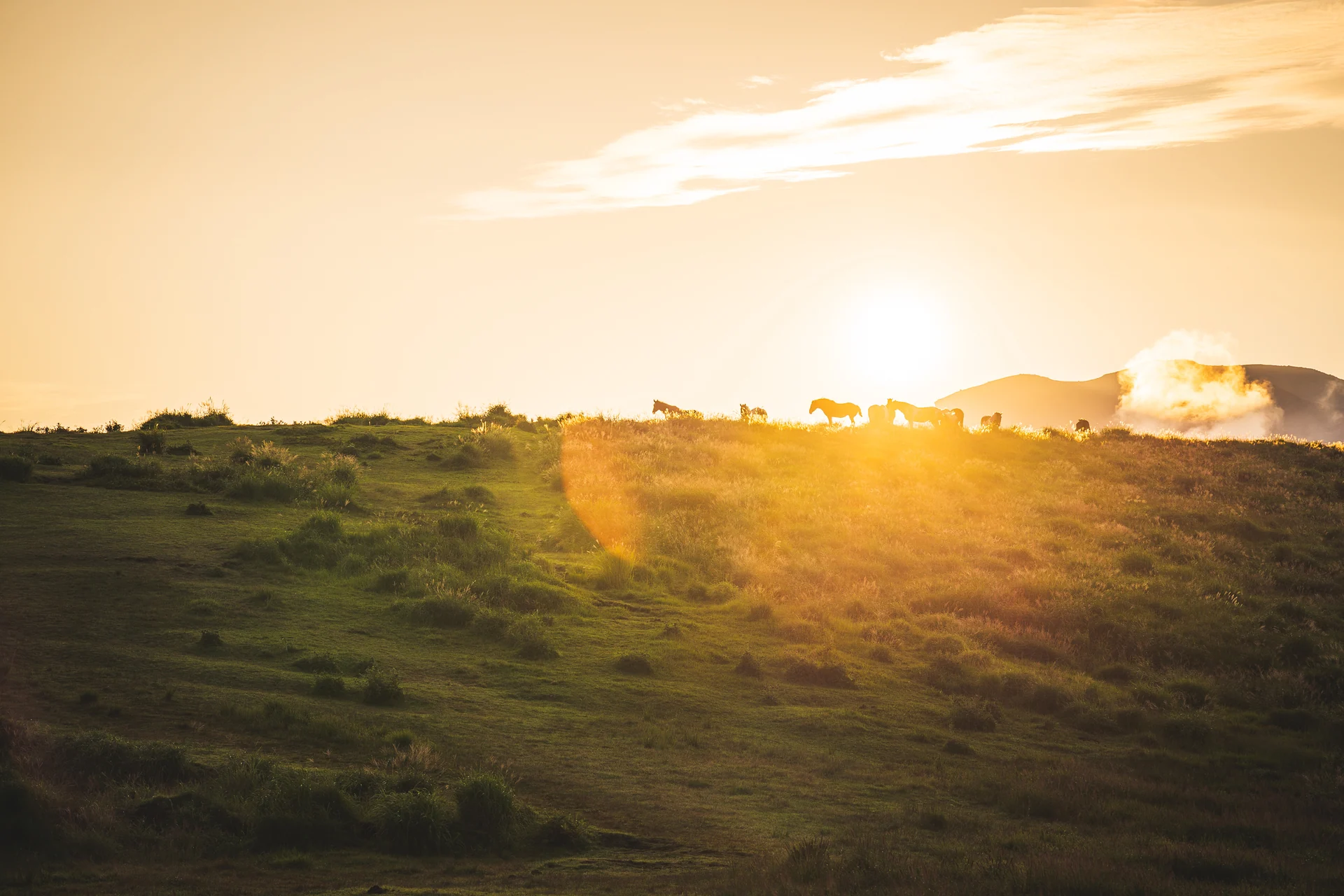
Aso's grassland is not untouched wilderness. Controlled burning, grazing and mowing have maintained it, and the agricultural system that sustains it was recognised as a Globally Important Agricultural Heritage System in 2013. The Bogatsuru and Tadewara wetlands of Kuju were registered under the Ramsar Convention in 2005.
On the Amakusa coast, Sakitsu village continued its Christian faith under the ban while living alongside Buddhism and Shinto, and in 2018 it became a component of the World Heritage listing of Hidden Christian sites in Nagasaki and Amakusa. The photographs on this page show the region; they are not properties for sale.
PLACES TO KNOW
The two source pages describe a dozen sub-areas, grouped here into eight: Kannawa and central Beppu, Yufuin, Yunohira and Tsukahara, Kuju and Chojabaru, Kuju Kogen and Taketa, the Aso caldera and Kusasenri, Kurokawa Onsen, Tsuetate and Oguni, and Amakusa with Sakitsu. Their access, scale and guest expectations differ sharply, which matters for how an inn is run.
Steam rises between roofs in Kannawa, with the jigoku (hell) viewing sites, communal baths and steam-cooking workshops close together. Central Beppu is a hot-spring city with a station, port and everyday urban life.
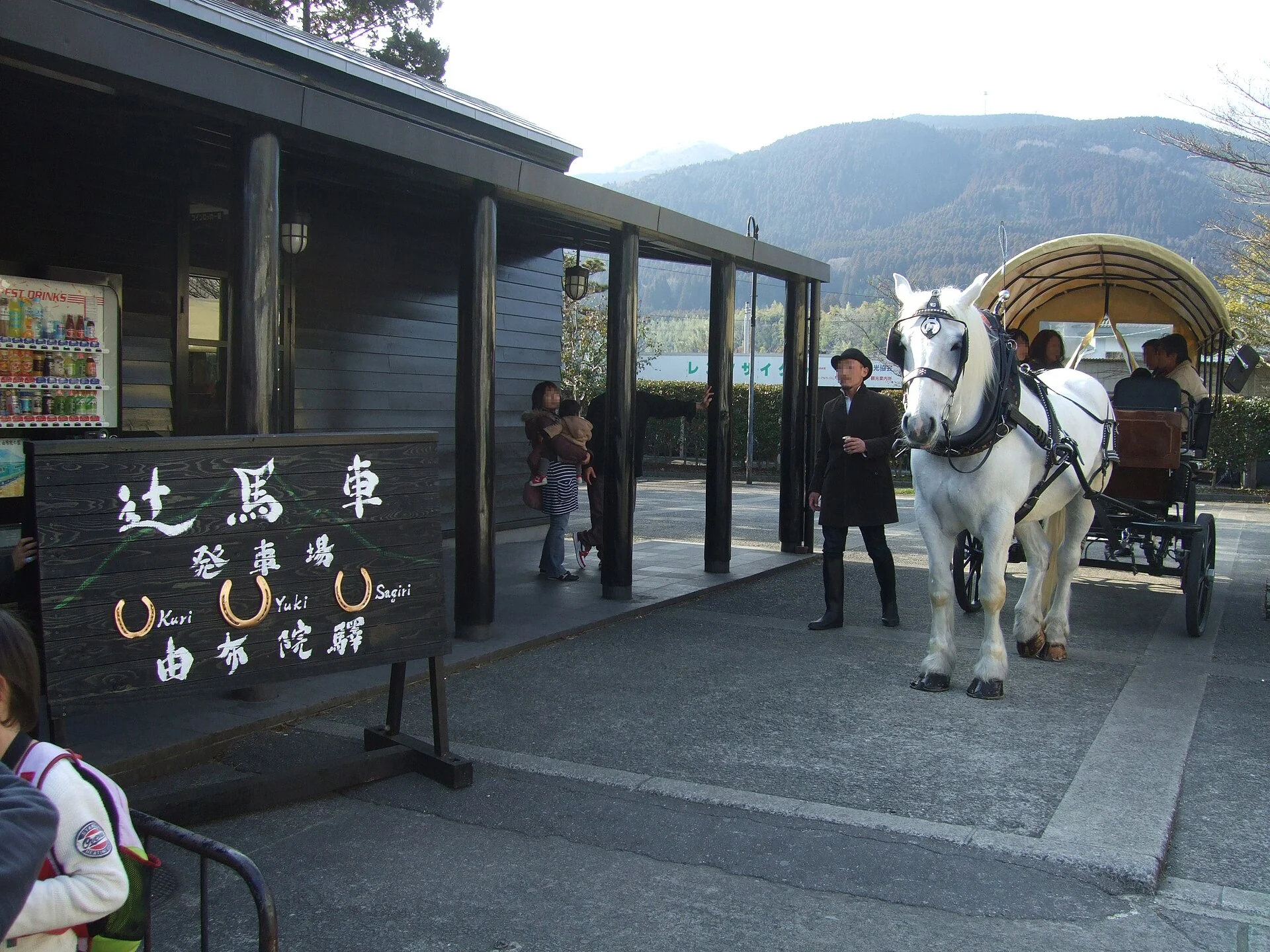
A basin below Mt Yufu where fields, homes, shops and inns overlap. Beyond Lake Kinrin, back lanes lead to Unagihime Shrine and Bussan-ji temple, and horse-drawn carriages run from the station.
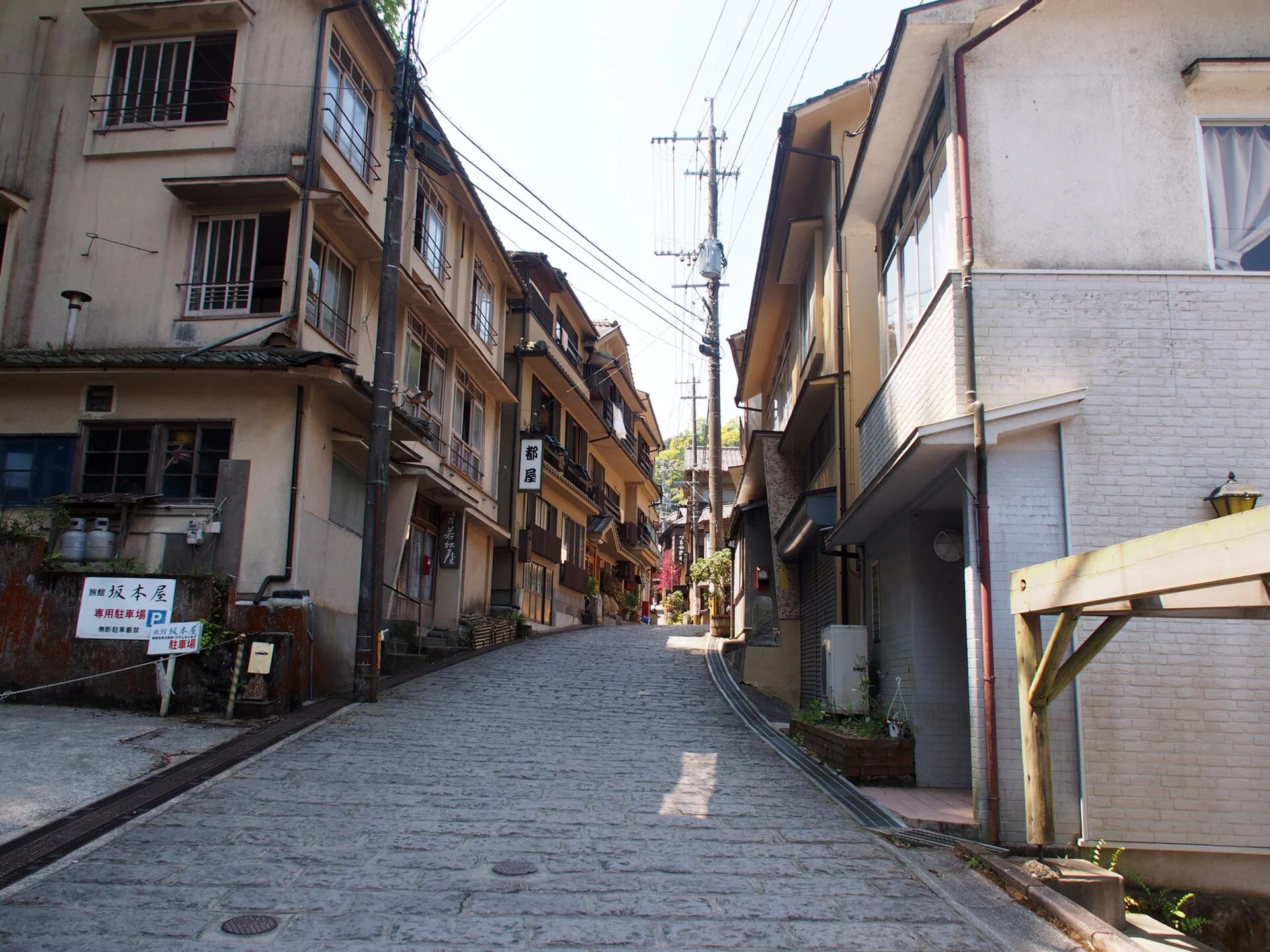
Yunohira keeps the feel of an old bathing village, with stone-paved lanes along a river. Tsukahara is a separate highland district north of Mt Yufu with scattered properties.
Grassland and the Tadewara wetland spread around Chojabaru, explored by boardwalk and through the visitor centre's exhibits, without climbing.
Open plateau views, then the castle town of Taketa, linked to the composer Rentaro Taki, and the water-shaped forms of Hakusui Dam. Plateau and town are not within walking distance.
From Daikanbo on the outer rim, farmland and towns spread across the caldera. Kusasenri and the Aso Volcano Museum explain an active volcano whose crater access changes daily.
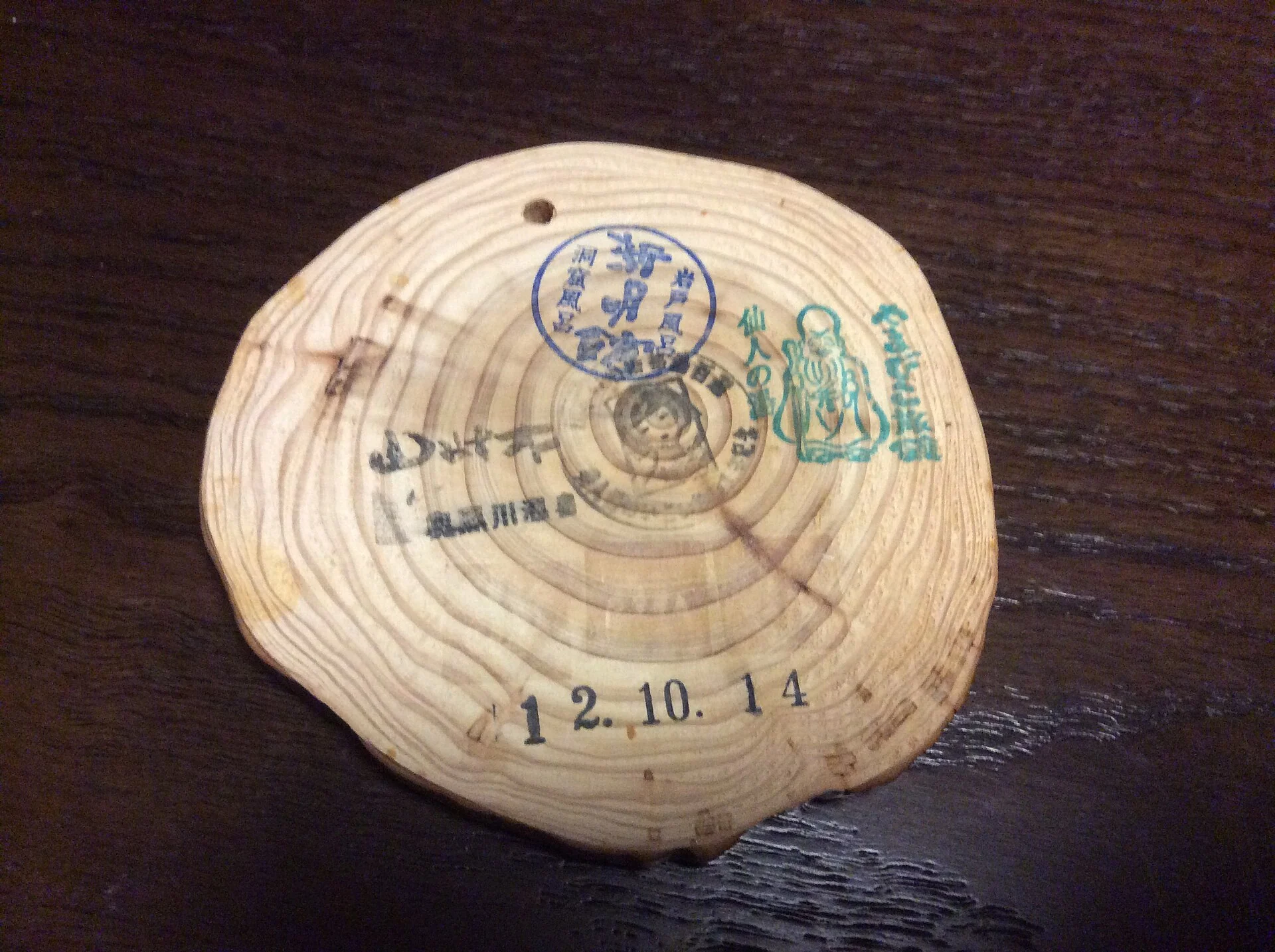
Guests walk the onsen street between bridges and small shops, using a wooden bath pass to try open-air baths at different inns.
Tsuetate has steaming spots and narrow setoya alleys; Oguni has the Kitasato Shibasaburo Memorial Museum. On the coast, the Amakusa Five Bridges, the Amakusa Shiro Museum and Sakitsu Church await.
SEASONS & TRAVEL
Spring brings fresh green to Yufuin, Yunohira and the Aso grassland; summer suits wetland walks and sea outings; autumn colours the grass of Kuju and Aso; winter is for steam, baths and museums. Mountain areas face snow and freezing roads and coastal areas face wind, so the source advises checking official road, transport and crater information before every journey.
In spring, Aso's controlled burning is local farm work, not a spectacle, and restrictions take priority. In summer, prepare for strong sun and sudden storms on the plateaus, and on Amakusa make a boat trip the centre of the day; dolphin sightings are never guaranteed.
The source's model itineraries are deliberately unhurried: a night in Kannawa for baths and steam-cooked food; Yufuin by day and a night in Yunohira; two nights on the Kuju plateau with a day in Taketa; Aso's grassland followed by a night in Kurokawa; Tsuetate with a visit to Oguni; and about two nights on Amakusa. Aso and Amakusa should not be squeezed into one short day.
THE LODGING MARKET
Official statistics cover each prefecture as a whole, not Beppu, Yufuin, Aso or Amakusa alone, and not the results of any individual property. In 2025, Oita Prefecture recorded 8,128,890 guest nights with an 18.3% foreign share, and Kumamoto Prefecture 8,437,520 guest nights with a 20.9% foreign share. Layer any property's own seasonal and weekday results on top of these broad patterns.
| Guest nights, all of Oita Prefecture | 8,128,890 guest nights 2025 (Jan–Dec), confirmed · source |
|---|---|
| Share of guest nights by foreign guests, Oita | 18.3% 2025 (Jan–Dec), confirmed · source |
| Room occupancy rate, ryokan, Oita | 43.3% 2025 (Jan–Dec), confirmed · source |
| Guest nights, all of Kumamoto Prefecture | 8,437,520 guest nights 2025 (Jan–Dec), confirmed · source |
| Share of guest nights by foreign guests, Kumamoto | 20.9% 2025 (Jan–Dec), confirmed · source |
| Room occupancy rate, ryokan, Kumamoto | 41.9% 2025 (Jan–Dec), confirmed · source |
BUYING & RUNNING AN INN HERE
In Beppu, hot-spring use differs by facility and source, so an address alone says nothing about water type, volume or steam rights: check supply contracts and inspection records for piping and heat equipment. Basin, highland, onsen-street and coastal inns need different transport, meals and maintenance. Judge demand from seasonal and weekday results, not scenery or a famous name. This is a checklist, not legal advice.
Confirm source and supply contracts, maintenance of piping and baths, and inspection records for heat equipment. Check how rights and permits under the Hot Springs Act (温泉法) would be transferred.
Inns operate under the Inns and Hotels Act (旅館業法). Confirm the licence position and succession procedure with Oita or Kumamoto Prefecture's licensing and public-health offices, and have fire-code and building-law compliance reviewed by licensed professionals.
Check on the actual roads whether guests can walk to shops or need a car, whether dinner is served in-house, and how shuttles work.
Sea air on the coast and freezing in the mountains wear buildings differently. Review maintenance records rather than inferring conditions from the address.
Aso crater restrictions, restoration works in Tsuetate and boat operations on Amakusa cannot be judged from photos or last year's information. Set procedures for checking before arrival and on the day, and prepare alternatives.
Aso's grassland is a place of production and conservation, and Sakitsu one of faith and daily life. Check farm and pasture access, parking and walking rules, and church visiting conditions before promising guests any experience.
FAQ
These answers explain what the guide covers across Oita and Kumamoto, what its photographs and prefecture-wide figures do and do not show, how to approach licences and hot-spring rights, and how current owners can begin a confidential conversation with TSUNAGU. For any legal or tax question, check with the relevant prefectural authorities and a licensed professional in Japan before deciding.
In Oita: Kannawa, central Beppu, Yufuin, Yunohira and Tsukahara, Kuju and Kokonoe, Kuju Kogen and Taketa. In Kumamoto: the Aso valley and outer rim, Kusasenri, Kurokawa Onsen, Tsuetate and Oguni, Kamiamakusa and Sakitsu.
No. The photographs show regional landscapes and culture with their locations credited. They imply no business relationship and do not show the location of any property for sale.
No. They are the Japan Tourism Agency's confirmed 2025 statistics for all of Oita and all of Kumamoto Prefecture, not figures for a single town or property.
It depends on the property. Hot-spring use differs by facility and source and falls under the Hot Springs Act, while lodging falls under the Inns and Hotels Act. Check with the prefectural authorities and a licensed professional.
Yes. Owners can start from current operations, facility issues and hopes for the next operator, with a private draft or a conversation with a TSUNAGU representative.
Reviewed by Masayuki Tsutsumi, Representative Director, Japan Realtor Co., Ltd. · Updated 2026-10-29 · Masayuki Tsutsumi
NEXT STEP
Membership is currently limited. Register your interest or speak with our advisory team; a first enquiry needs only an email address.
