
01
Atami & Ajiro
Shopping streets slope down from the station to the sea, so bathing and town walks fit into one stay, from Kiunkaku to the Itokawa promenade and its early-blooming Atami cherry trees. Ajiro and Taga offer quieter seaside stays.
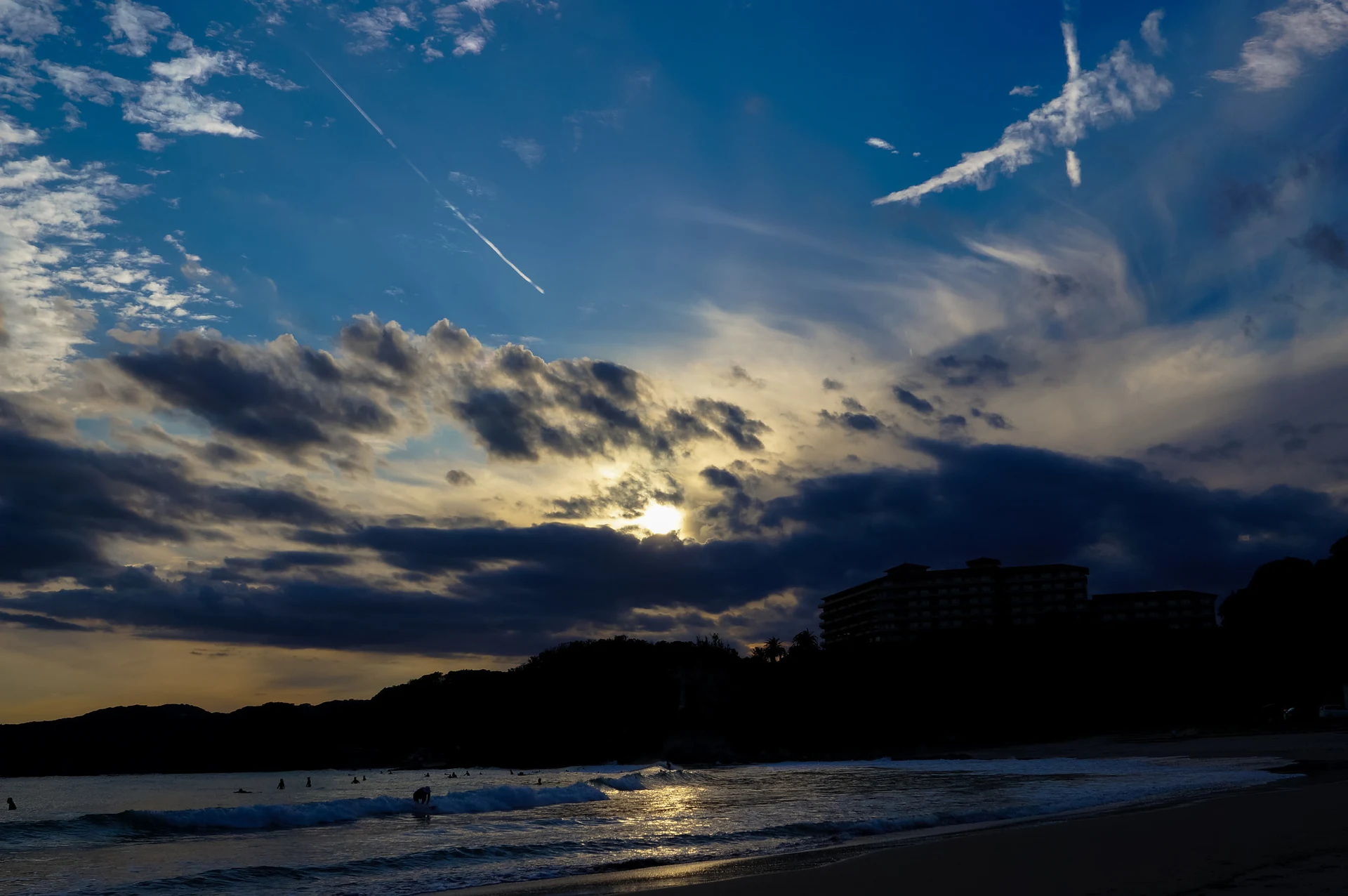
REGIONAL GUIDE — JAPAN
Shizuoka Prefecture · Izu Peninsula
A seaside holiday, a night in a hot-spring town, the quiet of the forest. The Izu Peninsula offers many reasons to stay, and each of its coasts and valleys suggests a different kind of inn.
OVERVIEW
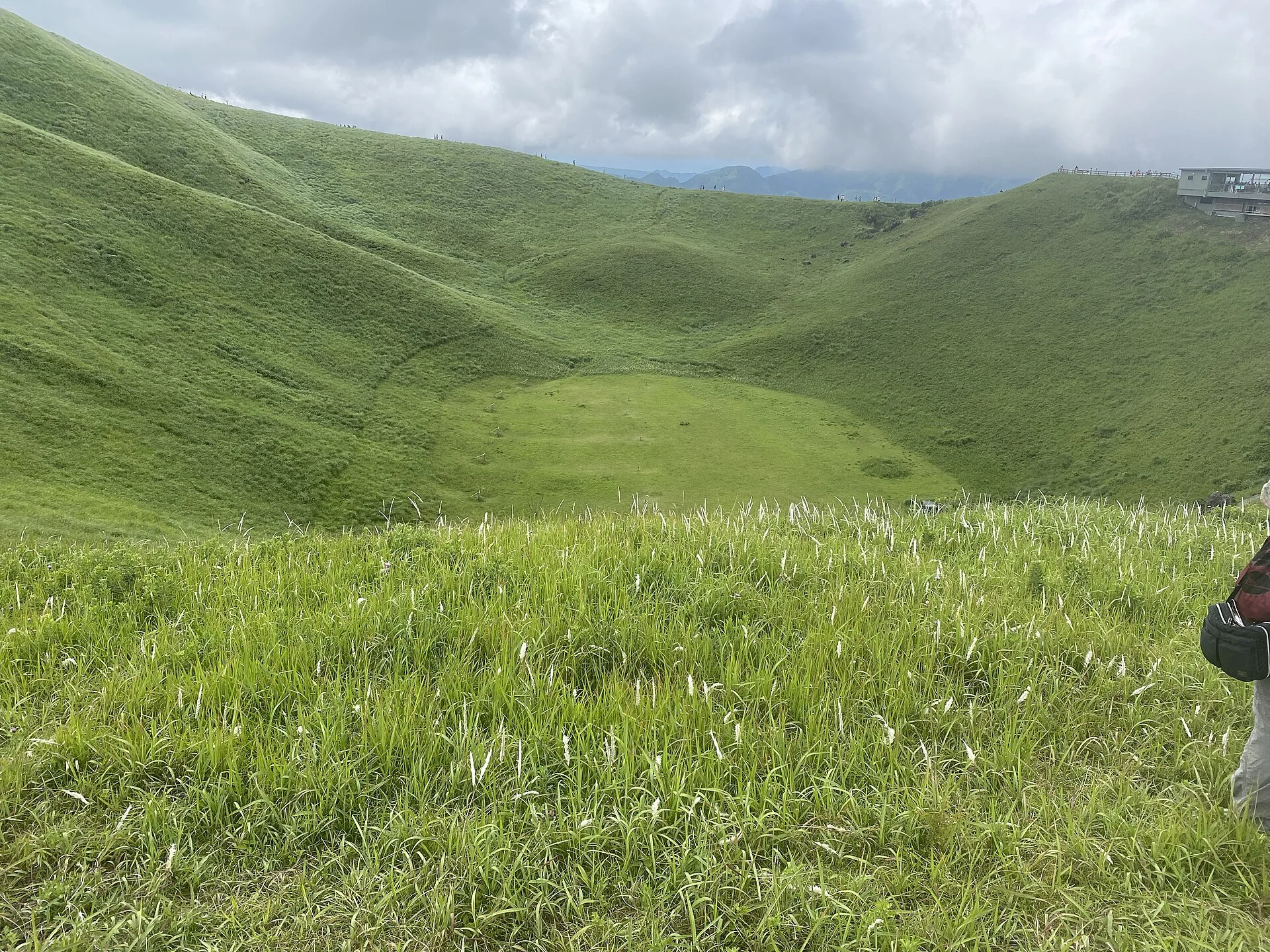
Izu is a peninsula in Shizuoka Prefecture with six distinct faces: Atami's hot-spring town by the sea; Ito and Kawana, with onsen streets and a golf history reaching back to 1928; volcanic Izu Kogen and the east coast; Shuzenji and Amagi in the forested interior; the port town of Shimoda; and the sunset coast of Nishi-Izu. Investors look at Izu because hot springs, sea, golf, food and history give guests many reasons to come, but access and seasonal patterns differ sharply from one area to the next.
Photos show the region, not properties for sale.
THE AREA
People come to Izu to watch the sea, to stroll a hot-spring town, to rest before a round of golf, or simply to do nothing. The guide runs from Atami south through Ito, Kawana and Izu Kogen to Shimoda, over the mountains to Shuzenji and Amagi, and to Toi and Dogashima on the west coast. Knowing each area's scenery and way of spending time is the starting point for judging an inn's value.
Kawana's leisure history is unusually well recorded. Kawana Hotel's founder, Okura Kishichiro, envisioned an English-style country life by the sea. The Oshima Course, designed by Otani Komyo, opened in 1928; the hotel and the Fuji Course by C.H. Alison followed in 1936, first with nine holes and then a full eighteen in 1937. Golf, good meals and a night with a sea view took root here as a way to spend a holiday. According to the hotel's own records, Marilyn Monroe and Joe DiMaggio stayed two nights at Kawana Hotel on their honeymoon in 1954.
Writers left their mark too. Atami's Kiunkaku was built as a villa in 1919 and became a ryokan in 1947, with links to Dazai Osamu and Yamamoto Yuzo. In Amagi-Yugashima, the Yumotokan, still an operating inn, is known as the place where Kawabata Yasunari wrote The Izu Dancer. Yosano Tekkan and Akiko visited Dogashima in 1935 and wrote poems about the Tensodo sea cave.
PLACES TO KNOW
The guide divides Izu into six areas. Atami pairs hot springs with town walks; Ito and Kawana combine onsen streets, golf and sea views; Izu Kogen and the east coast offer volcanic scenery and a chain of seaside spas; Shuzenji, Amagi and Izu-Nagaoka are about rivers, forest and wasabi; Shimoda is a port town suited to longer stays; and Nishi-Izu is known for coastal caves and sunsets.
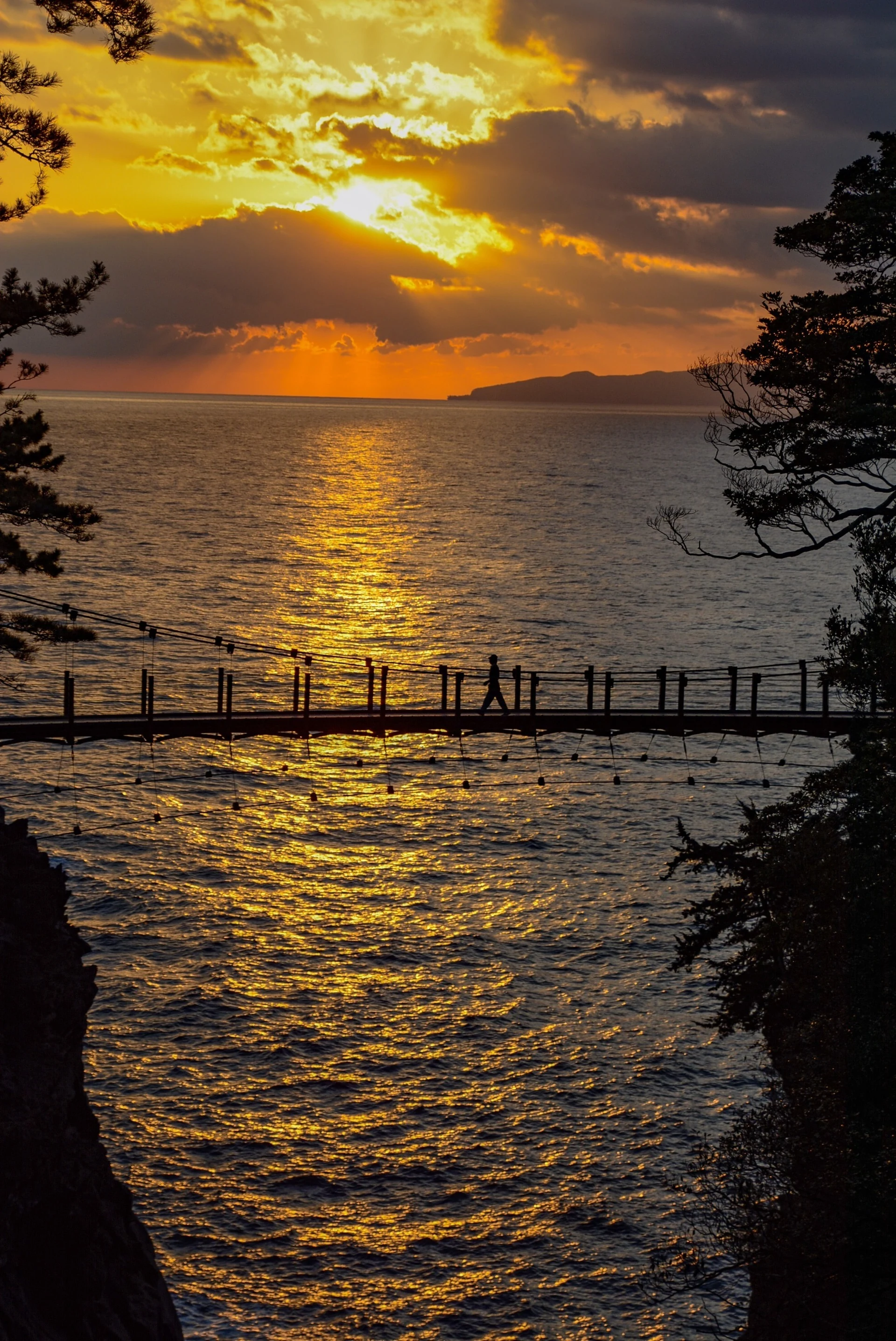
Shopping streets slope down from the station to the sea, so bathing and town walks fit into one stay, from Kiunkaku to the Itokawa promenade and its early-blooming Atami cherry trees. Ajiro and Taga offer quieter seaside stays.
Ito's onsen streets lead on to Kawana's rolling coastal landscape and its historic golf courses shaped by the seaside terrain. Mount Komuro looks out over Sagami Bay and the town of Ito.
Grass-covered Mount Omuro, with a walk of about 1 km around its crater rim, and the Jogasaki coast, formed where lava flowed into the sea. Further south, Hokkawa, Atagawa and Inatori continue a line of coastal hot springs.
Shuzenji temple, the Katsura River and the bamboo-grove path anchor a walkable onsen town. Toward Amagi the scenery turns to forest, clear water, terraced wasabi fields and the stone-built Old Amagi Tunnel.
A port town for surfing, SUP, sea kayaking and diving, with Perry Road's stone paving, namako-kabe walls and Izu-stone buildings. The Ryugukutsu sea cave at Tougyu is a short detour.
An indented coast, the Tensodo cave visited by sightseeing boat, and sunsets over the sea. Unlike the railway-served east coast, this side is explored by road and bus.
SEASONS & TRAVEL
Spring brings flowers and fresh green, summer centres on the sea at Shimoda and Nishi-Izu, autumn suits coastal walks, the Amagi road and sunsets, and winter into early spring means plum and Atami cherry blossom in the hot-spring towns. Access follows three corridors: the JR Ito Line and Izu Kyuko Line down the east coast, the Izu Hakone Railway from Mishima toward Shuzenji, and roads and buses over the mountains to the west coast.
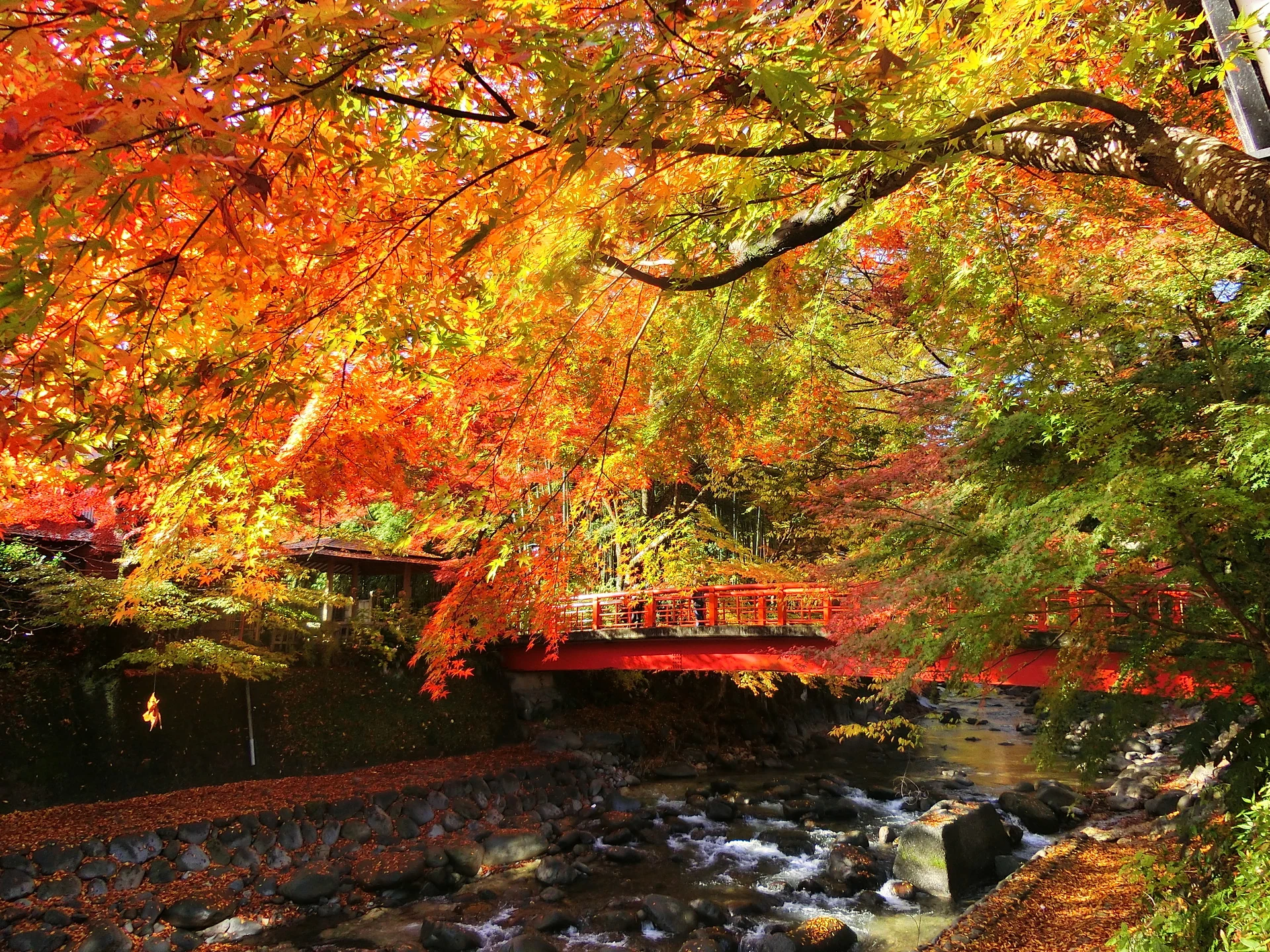
Blossom times, sea conditions and events shift with the year and the weather, and boat tours, lifts and sea activities may be suspended in poor conditions. On the east coast, plan the transfer from the station and evening movement; in the mountains, guests need things to enjoy once they arrive; on the west coast, allow time for driving or the bus.
Sample trips in the guide: one night on the east coast around golf at Kawana, a stay in Shuzenji with an outing to Amagi, or two unhurried nights from Shimoda to the west coast to wait for sunset.
Prefecture-wide data show the seasonal swing: in 2025 August was Shizuoka's busiest month with 2,527,970 guest nights, and its room occupancy peaked that month at 63.6%; June was the quietest month.
THE LODGING MARKET
For the whole of Shizuoka Prefecture, the Japan Tourism Agency recorded 22,407,160 guest nights in 2025, with foreign guests accounting for 9.9%. Resort-hotel room occupancy was 55.7% and ryokan occupancy 42.4%. These figures cover the entire prefecture, not Izu alone or any listed property, and should not be turned directly into a revenue estimate for one inn; read them alongside results by area, property type and day of the week.
| Total guest nights | 22,407,160 2025 (Jan–Dec, confirmed) · source |
|---|---|
| Share of foreign guest nights | 9.9% 2025 (Jan–Dec, confirmed) · source |
| Ryokan room occupancy | 42.4% 2025 (Jan–Dec, confirmed) · source |
| Resort hotel room occupancy | 55.7% 2025 (Jan–Dec, confirmed) · source |
| Licensed ryokan & hotel facilities | 2,535 As of 31 March 2025 (end of FY2024) · source |
BUYING & RUNNING AN INN HERE
The guide frames ownership in Izu as deciding what to keep: use the building as it is, change how it is run, or hand it on to the next operator. The practical checks follow from location, such as station hills and shuttles in Atami, access roads in hillside villa districts and sea-wind wear on the west coast, plus licences, hot-spring rights, plant condition and the total investment needed to reopen.
In Atami, check station hills, shuttles, parking and distance to restaurants. For villa-district and hilltop sites, check access roads, gradients, management rules and night-time movement. On the west coast, check secondary transport.
For small inns, whole-house rentals or former company retreats (保養所), confirm the permitted use and business licence under the Inns and Hotels Act (旅館業法), building compliance, management rules, neighbour relations and renovation costs. Whether a building can be converted is decided case by case.
Confirm hot-spring usage conditions and rights to the source and piped supply under the Hot Springs Act (温泉法), and survey pipes, pumps, heat sources and plumbing. On the west coast, factor in sea-wind wear on equipment and food delivery.
If dinner is handled with local restaurants, confirm their opening days, seating, transfers, breakfast arrangements, reservation hand-offs, agreements and peak-day capacity. Review fish and ingredient supply at handover.
Do not build the numbers on summer beach demand alone. Plan for longer stays, including meals, laundry, luggage and transport, and look for reasons guests will choose the inn in other seasons, scaled to its size.
FAQ
This is a broad regional guide to Izu and does not identify any property for sale. Its market data cover all of Shizuoka Prefecture, not individual towns. Listings on TSUNAGU are grouped by the wider Chubu region, and details are confirmed in dialogue with the seller and TSUNAGU staff. For licences, hot-spring rights, tax and legal questions, check with the authorities and a licensed professional.
Atami, Ito, Kawana, Izu Kogen, the east coast, Shuzenji, Amagi, Izu-Nagaoka, Shimoda, Minami-Izu and Nishi-Izu. It is a broad travel and lodging guide and does not indicate administrative boundaries or where any listed property is.
No. The photographs show Izu's regional scenery. Neither they nor the attractions and facilities described, including Kawana Hotel and its golf courses, represent properties for sale or any business relationship.
No. They are the Japan Tourism Agency's confirmed 2025 figures for the whole of Shizuoka Prefecture. Occupancy in individual Izu towns or at a property under review must be checked separately.
Browse TSUNAGU's public listings for the Chubu region, which are not limited to Izu, or register your purchase conditions. Detailed terms are confirmed in dialogue with the seller and TSUNAGU staff.
Reviewed by Masayuki Tsutsumi, Representative Director, Japan Realtor Co., Ltd. · Updated 2026-10-29 · Masayuki Tsutsumi
NEXT STEP
Membership is currently limited. Register your interest or speak with our advisory team; a first enquiry needs only an email address.